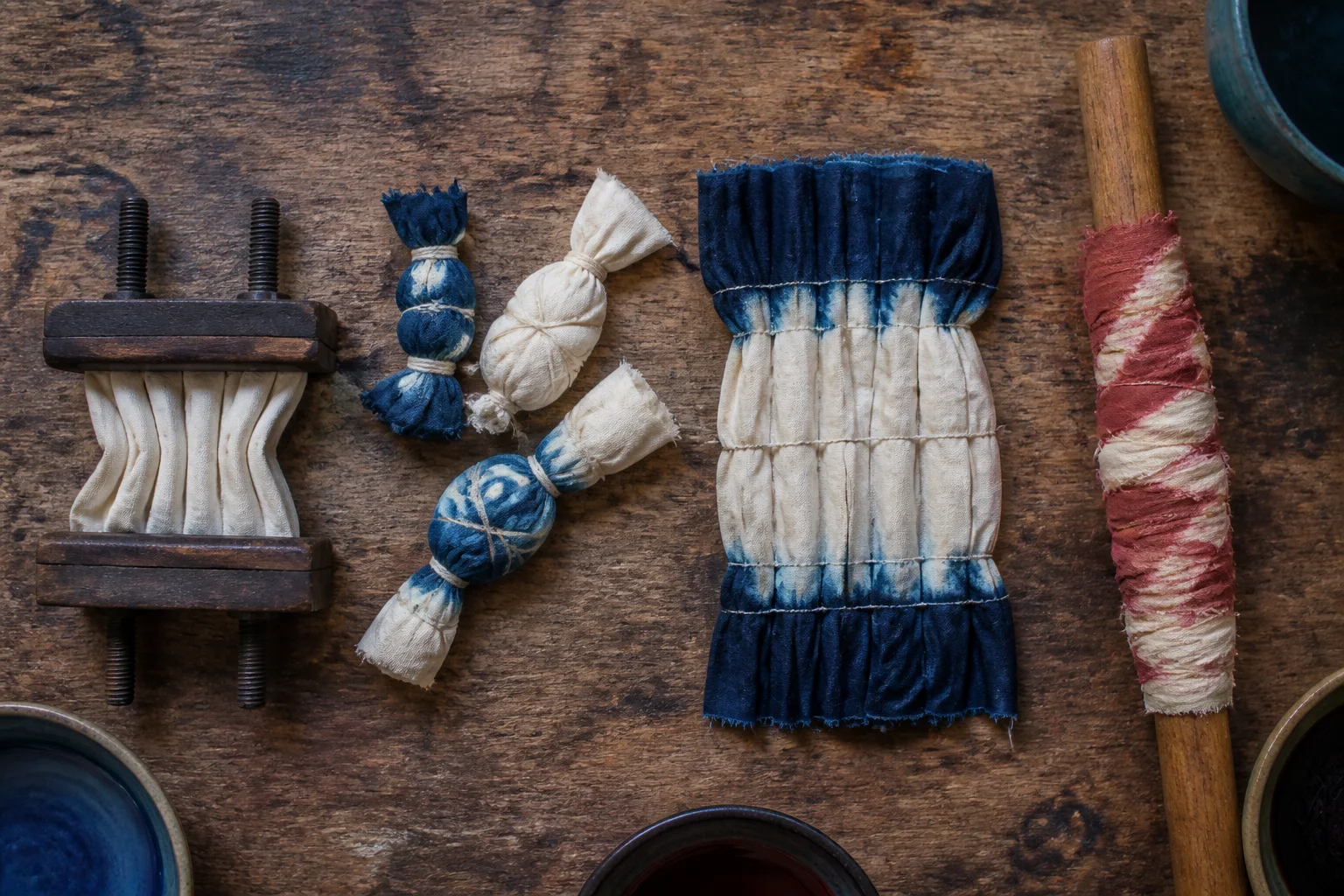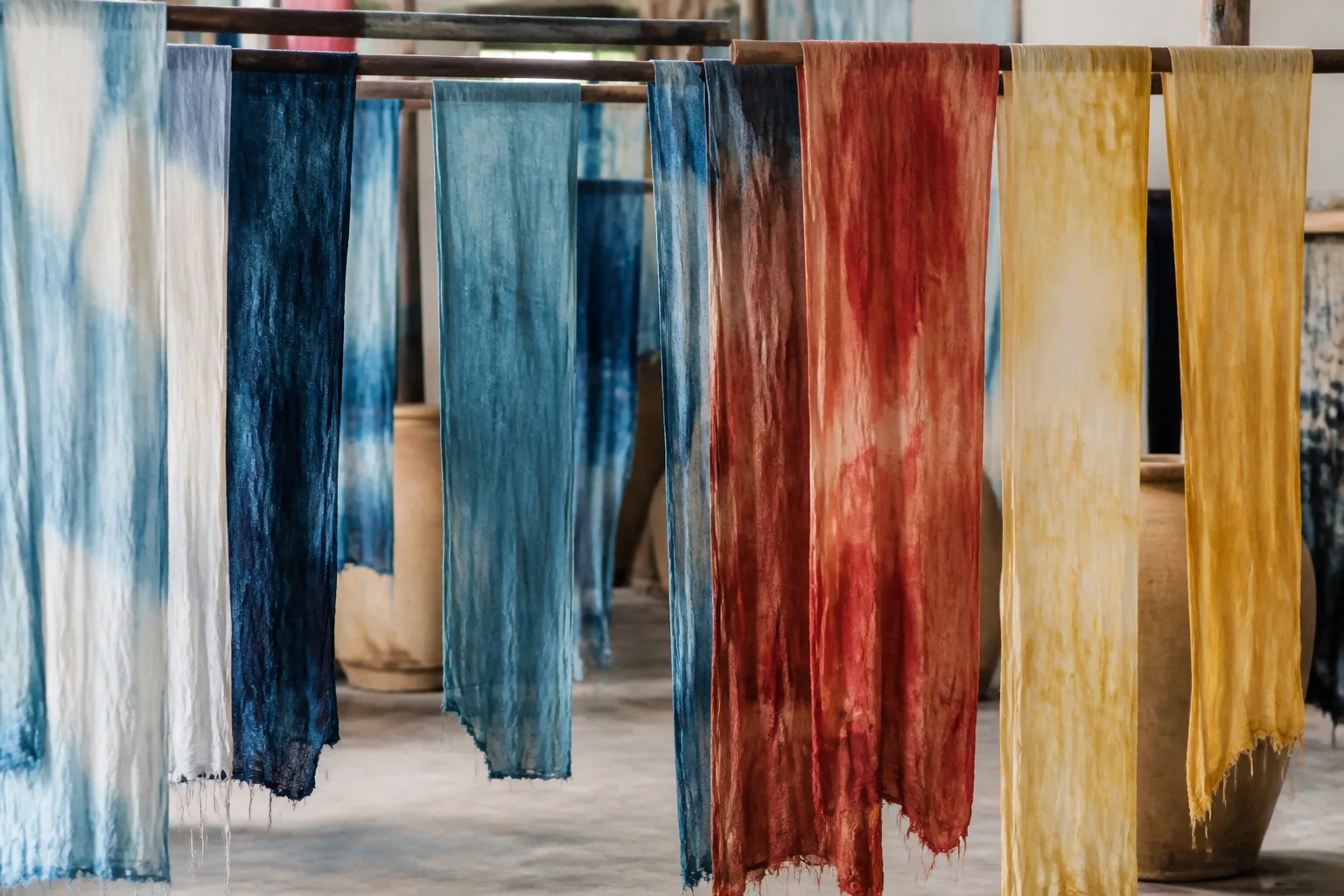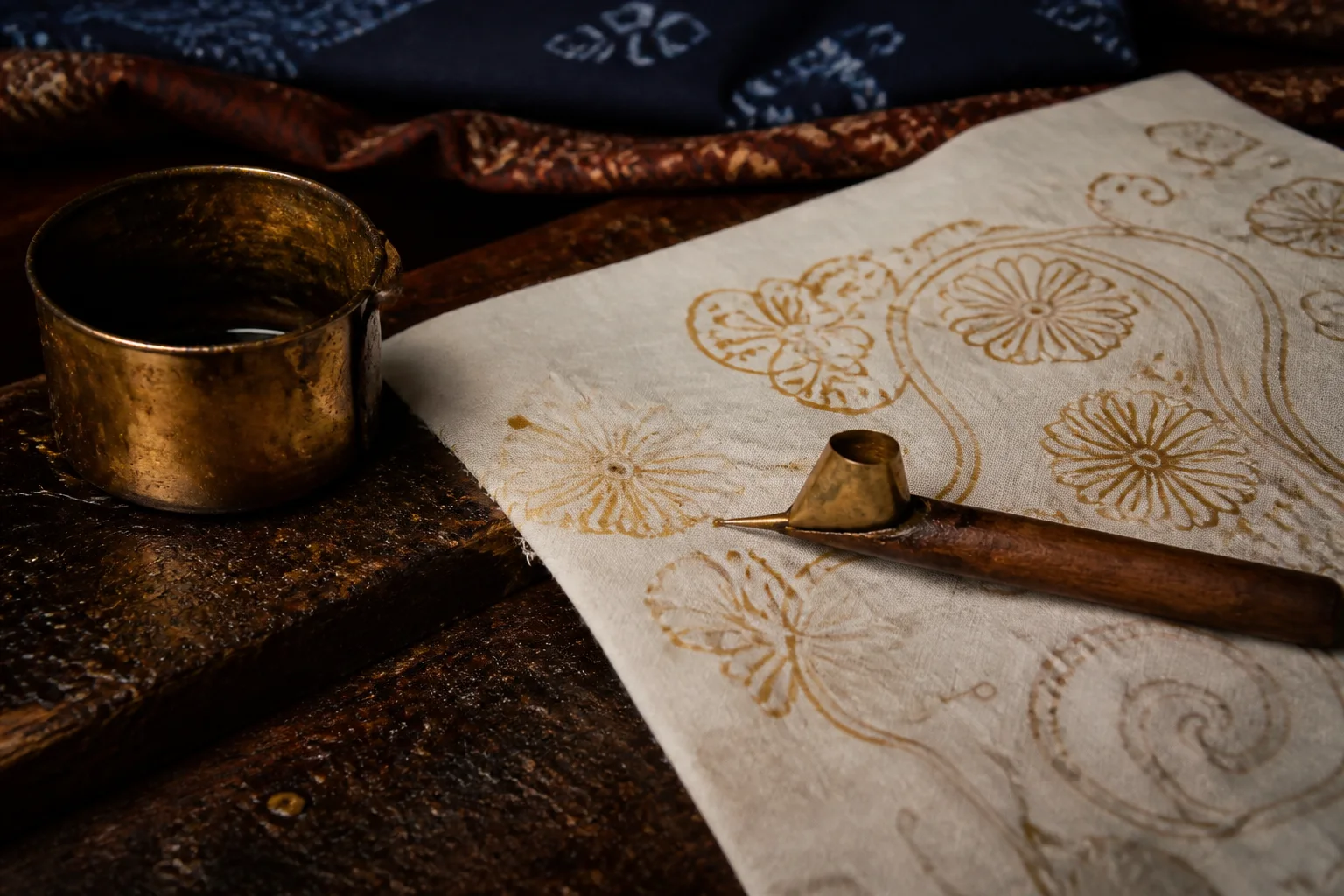
Indigo looks simple when the cloth turns blue, but a vat is a material system with its own product, conditions and safety document. Learn the questions before copying a method.
Understand the change
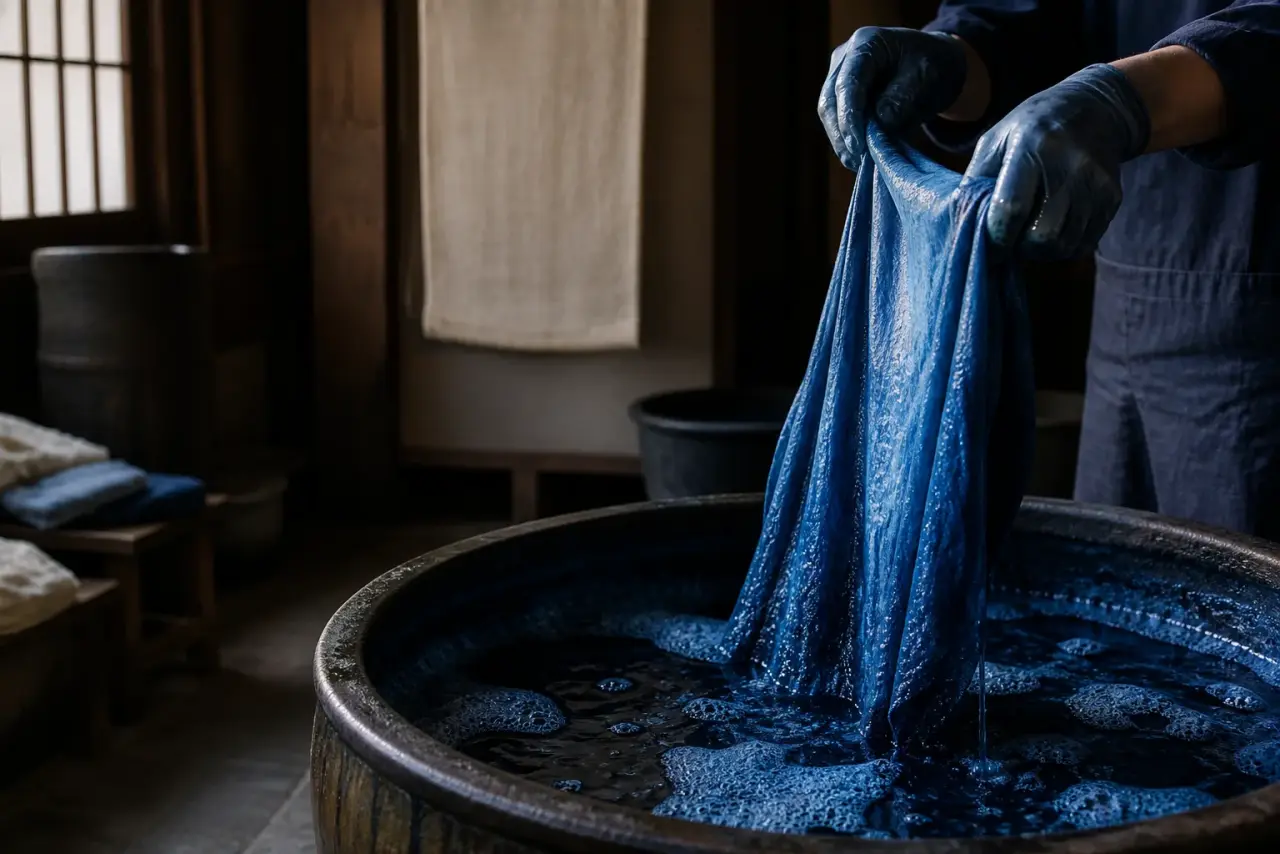
Oxidation is part of why indigo cloth changes as it leaves the vat. A visible shift can explain colour, but it does not provide a recipe or guarantee a result across products.
An indigo vat rewards the same patience at the end of the day. While the last skeins oxidize from green to blue, a glass poured beside the workbench holds its own chain of controlled steps, and the desk's journal note, a beer matched to a table, traces it from the grain bill through the mash and the boil to the finished wort. Ale, lager and sour fermentations each follow a different timetable, much as successive dips build depth at different speeds. Reading the process rather than the label tells you what belongs beside a plate, and beside the drying rack.
The vat shares habits with other workshops where process is recorded as carefully as the result. A dated journal note on sorting the sword by blade and hilt follows the same discipline: it explains how the Oakeshott typology sorts medieval blades, how pattern welding and heat treatment hardened a bloomery core, and how humidity and bare-hand contact are kept off a finished blade. Readers who log dips, reduction and colour build will recognise the register-keeping instinct behind it.
- Observe before and after
- Record the exact material
- Keep the product name
Treat the vat as a safety question
Compound data and a workshop anecdote are not substitutes for the current label and SDS of a commercial formulation. Ventilation, exposure route and disposal need their own check.
A journal note follows the same patience into the brewery: what an indigo vat shares with a brew day watches foam, smell and temperature on the fermenter's side.
- Read the SDS
- Do not generalise hazard data
- Follow local requirements