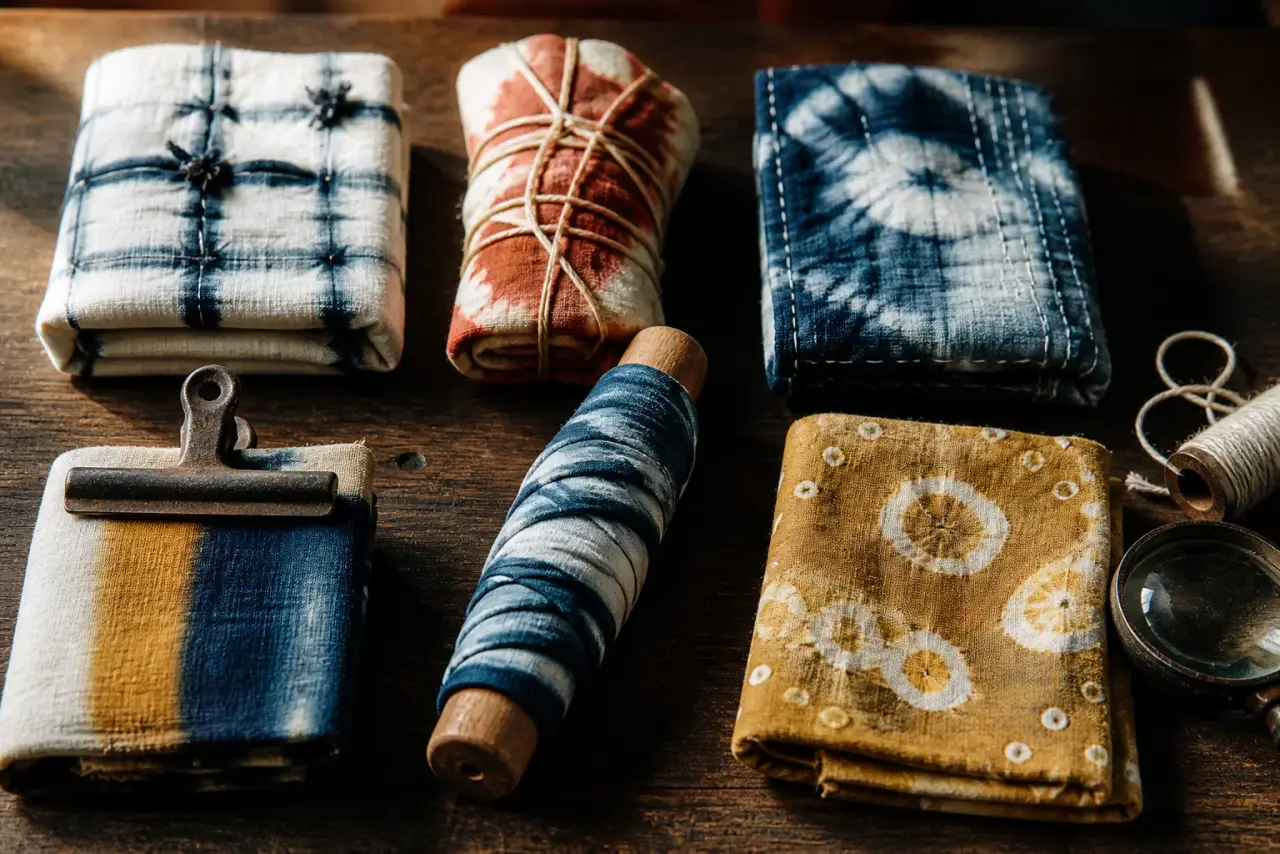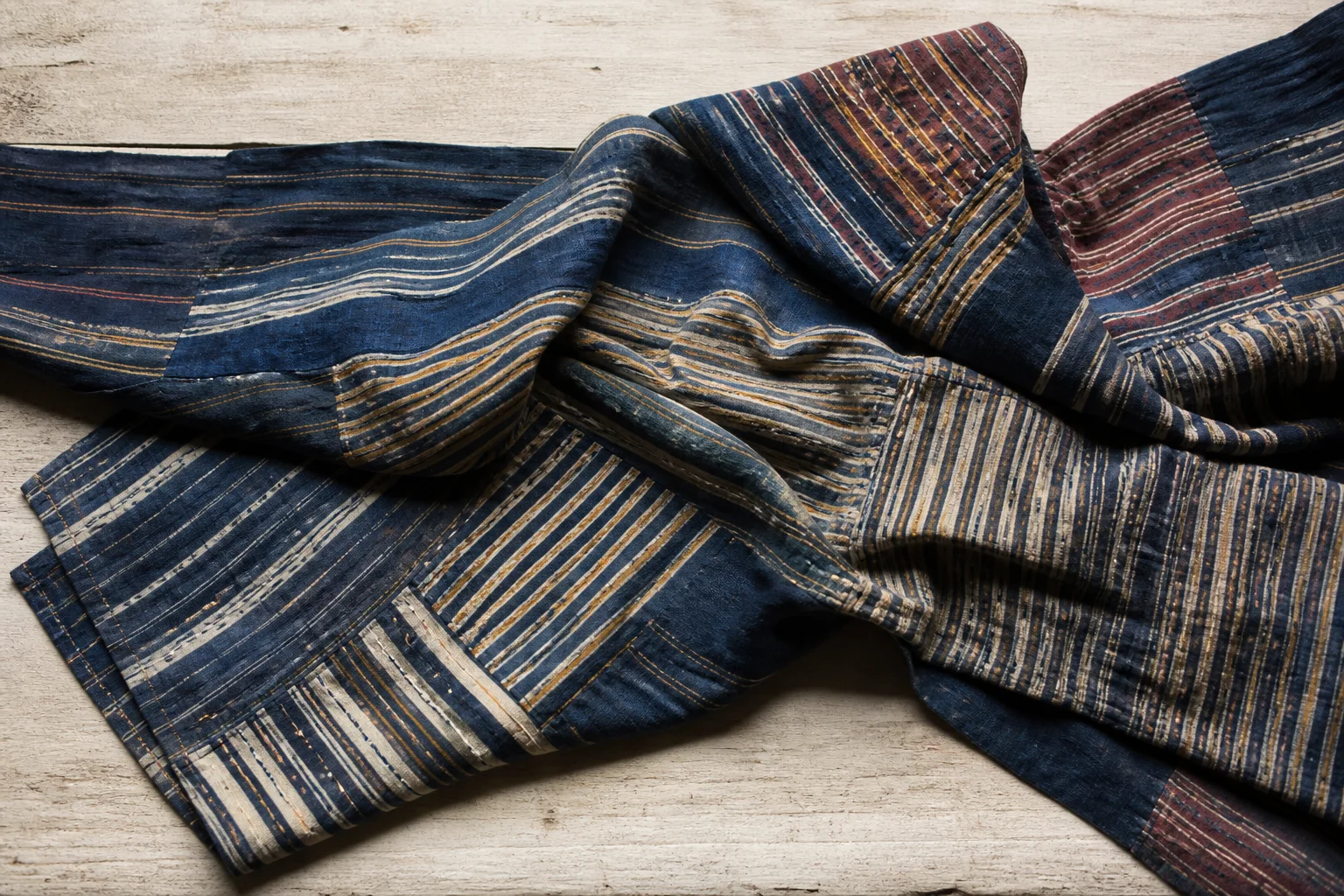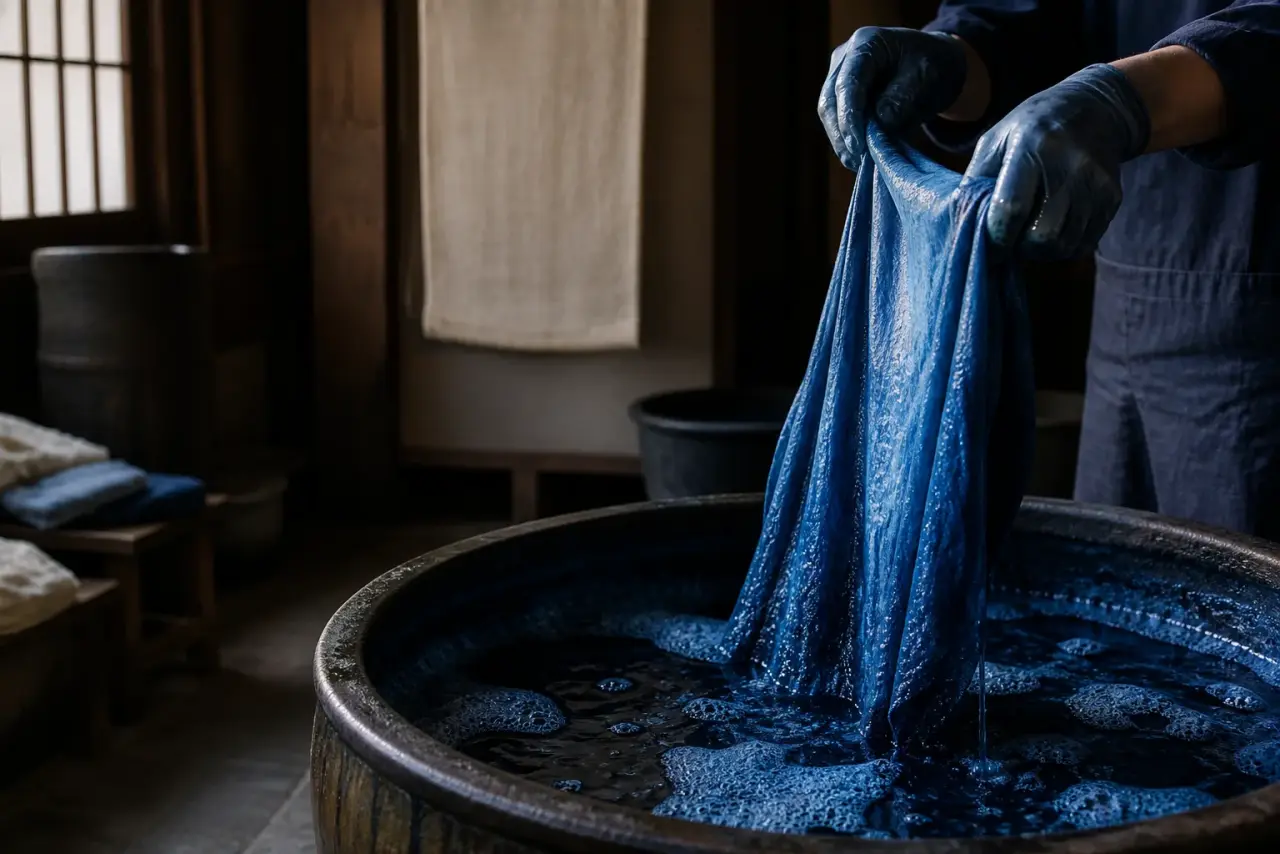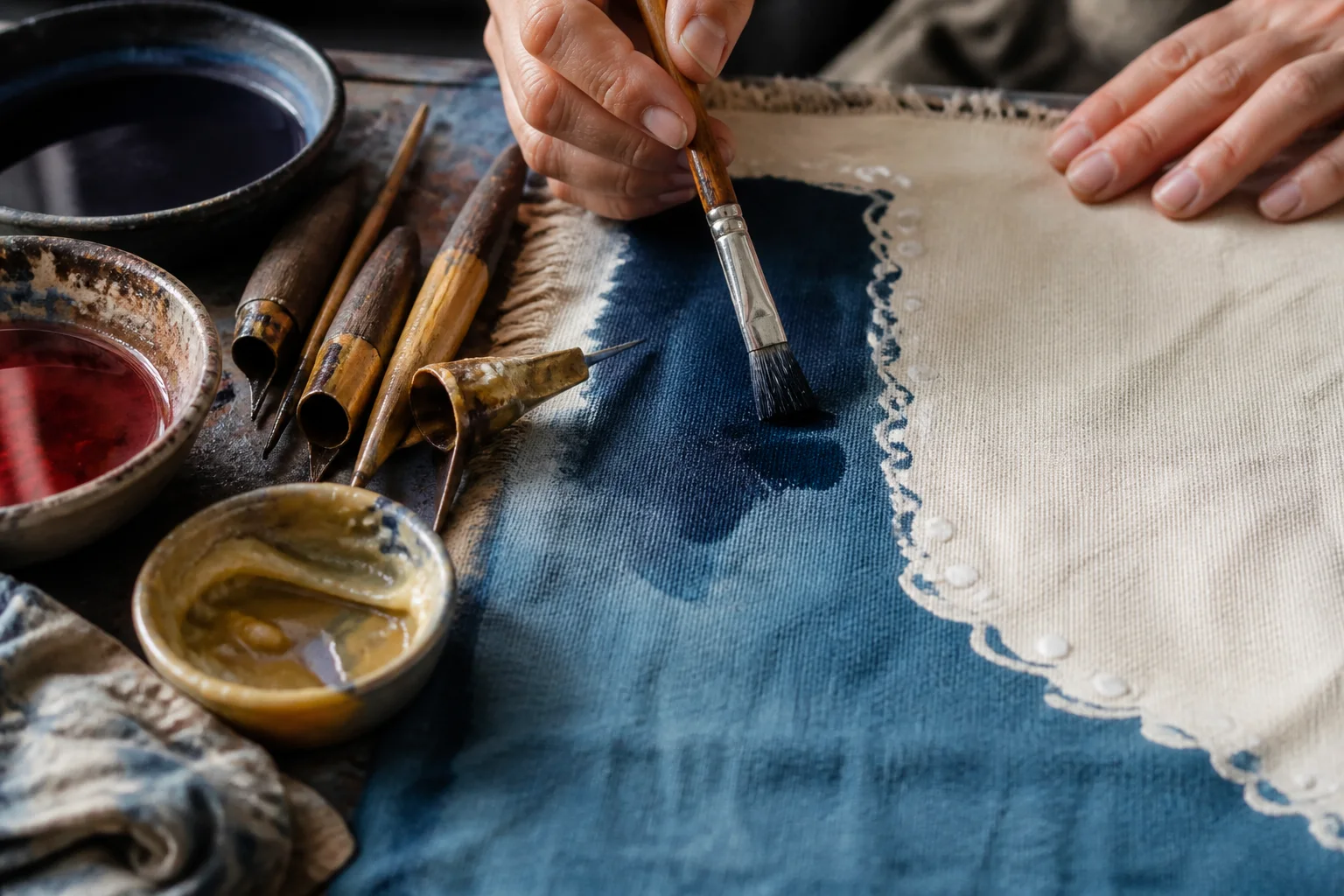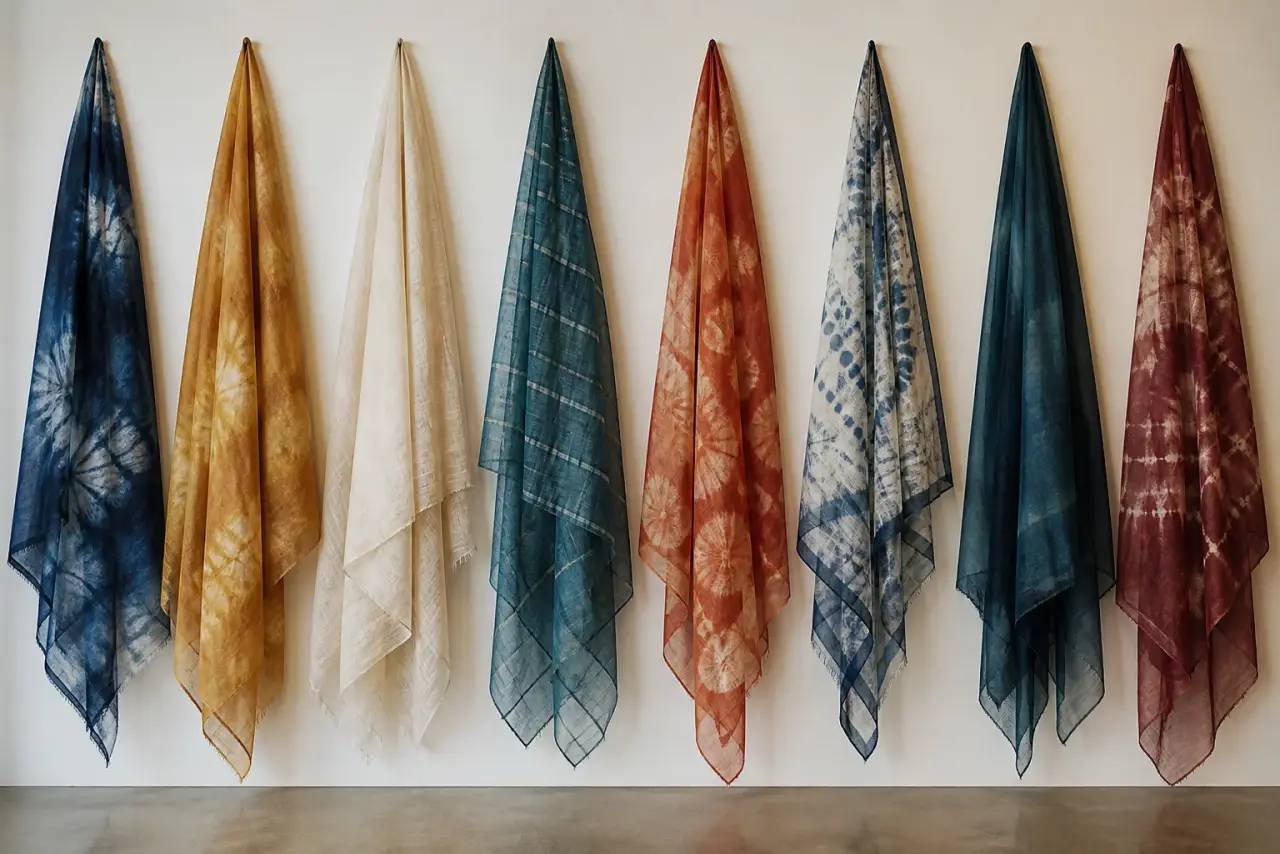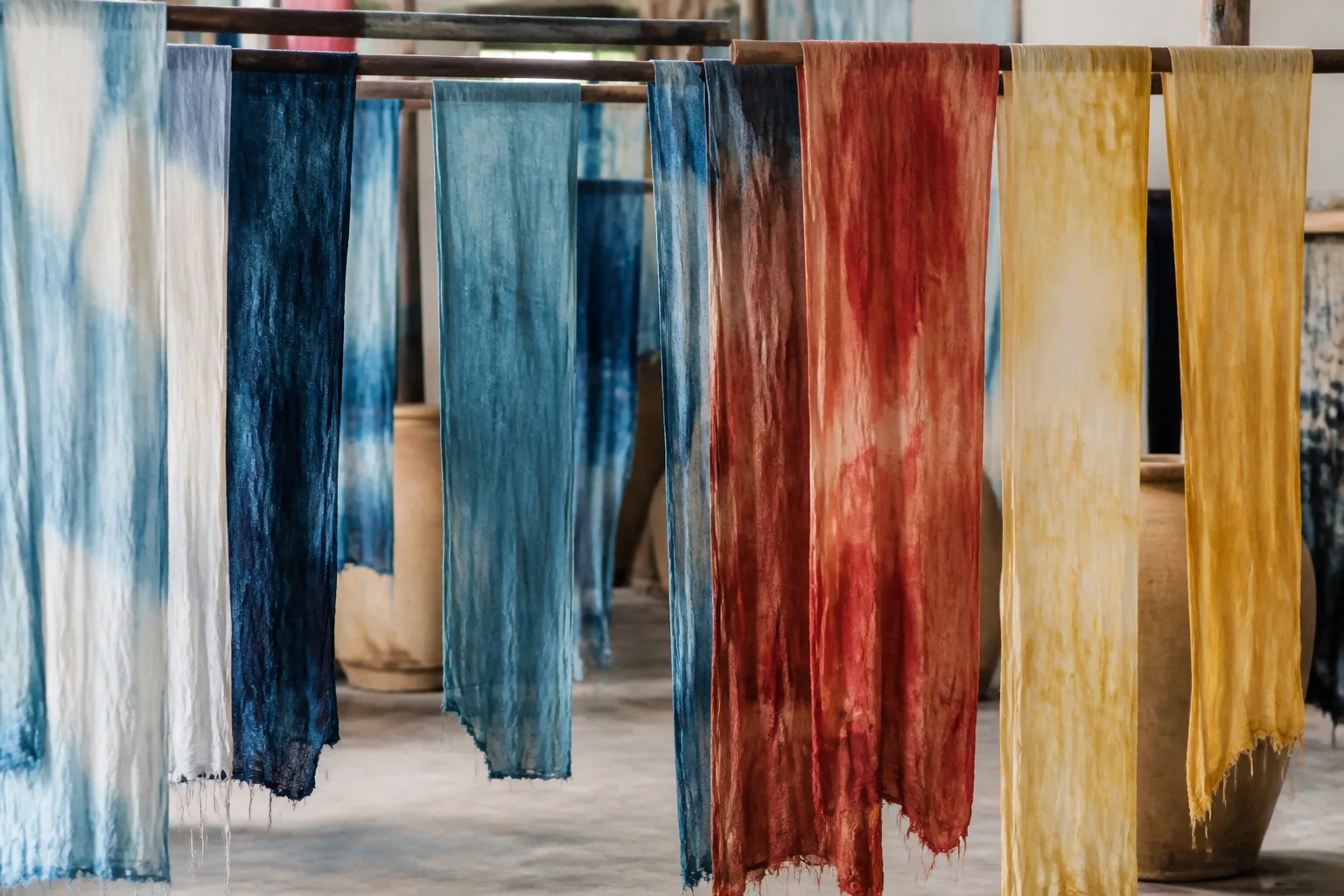
Colour is evidence of a sequence, not a shortcut to a formula. Fibre, concentration, oxidation, layering and finishing can all change what reaches the eye.
Read the layer
A pale edge beside a saturated centre may describe exposure, compression or a later bath. The same hue can arrive through different material histories.
A colour change can travel beyond cloth. The same disciplined looking applies when a dyed strand leaves the vat and becomes a strung piece: choices about material, size and finish follow the surface they will sit on. For anyone weighing how to choose beads for a first strung piece, reading a bead size and hole is the practical starting point, followed by planning the construction around its weakest join rather than its showiest bead. The Resist & Form desk records these slow decisions, one dated note at a time, the way swatches are logged.
A swatch study stays at the bench until it meets a record, and tartan is one place where colour, thread and archive line up. Searching for a tartan by name and region gives two ways in: a surname search returns every sett recorded for a clan or family, while a regional search lists setts tied to a district, a county or an island group. Behind both sits the official Scottish Register of Tartans in Edinburgh, where each entry carries a threadcount that reads like a weaving draft, so a dyed surface can be checked against a pattern before any cloth is cut.
- Compare adjacent zones
- Notice the fibre and finish
- Ask which layer came first
Colour is not a safety signal
A beautiful result does not reveal a product's hazards, fastness or disposal requirements. Those decisions belong to the exact product label and current safety data.
The same question has a living side: reading a vat as a fermentation compares the dyer's surface signs with a brewer's.
- Keep colour and safety separate
- Link the method page
- Do not publish a universal formula