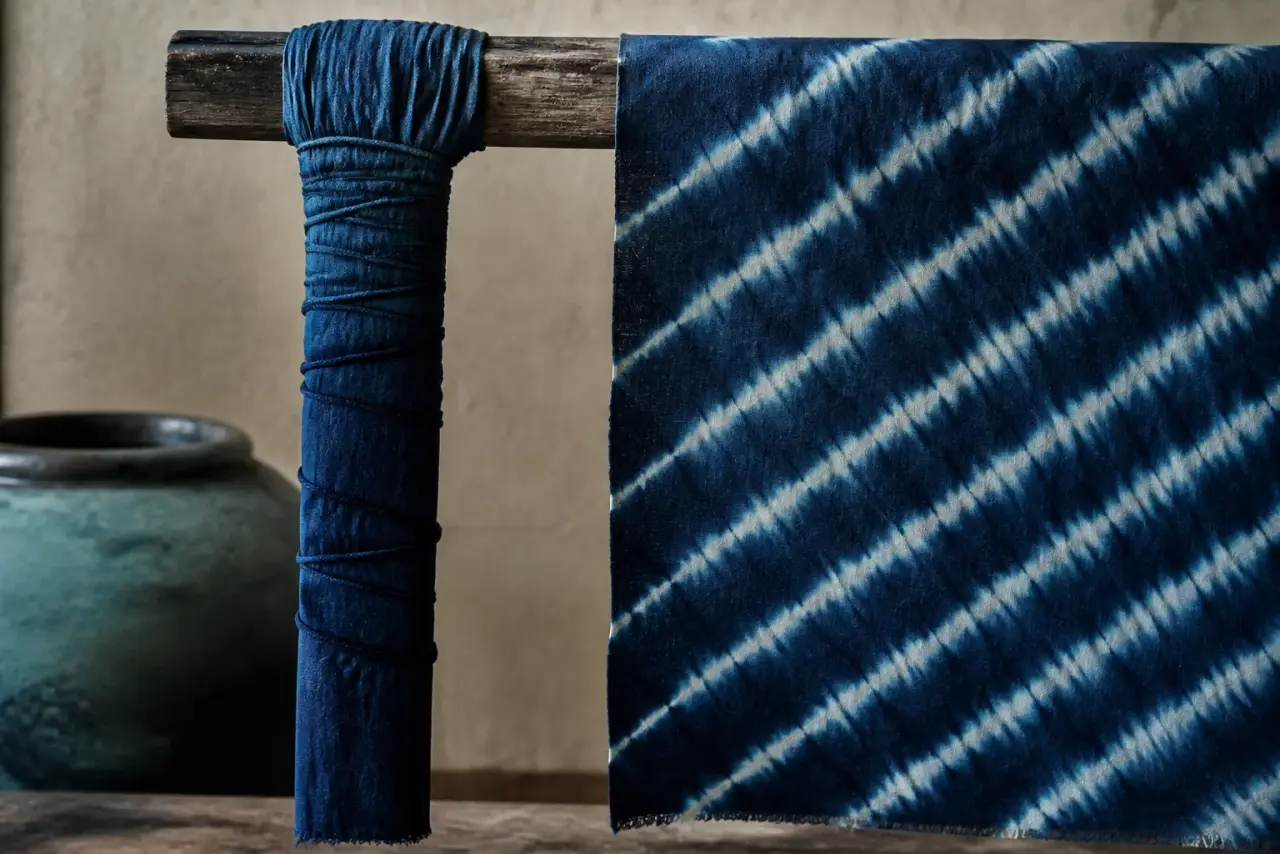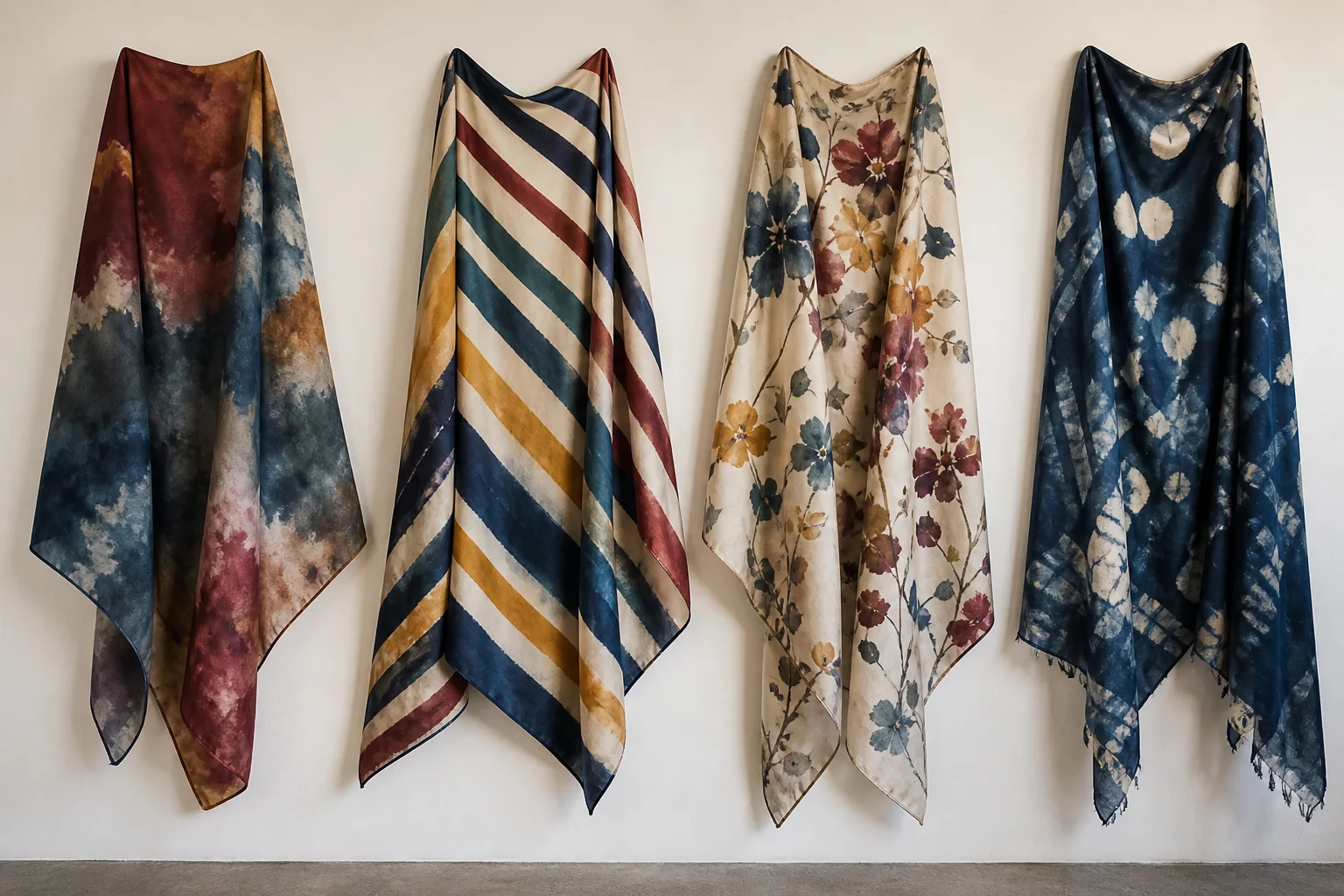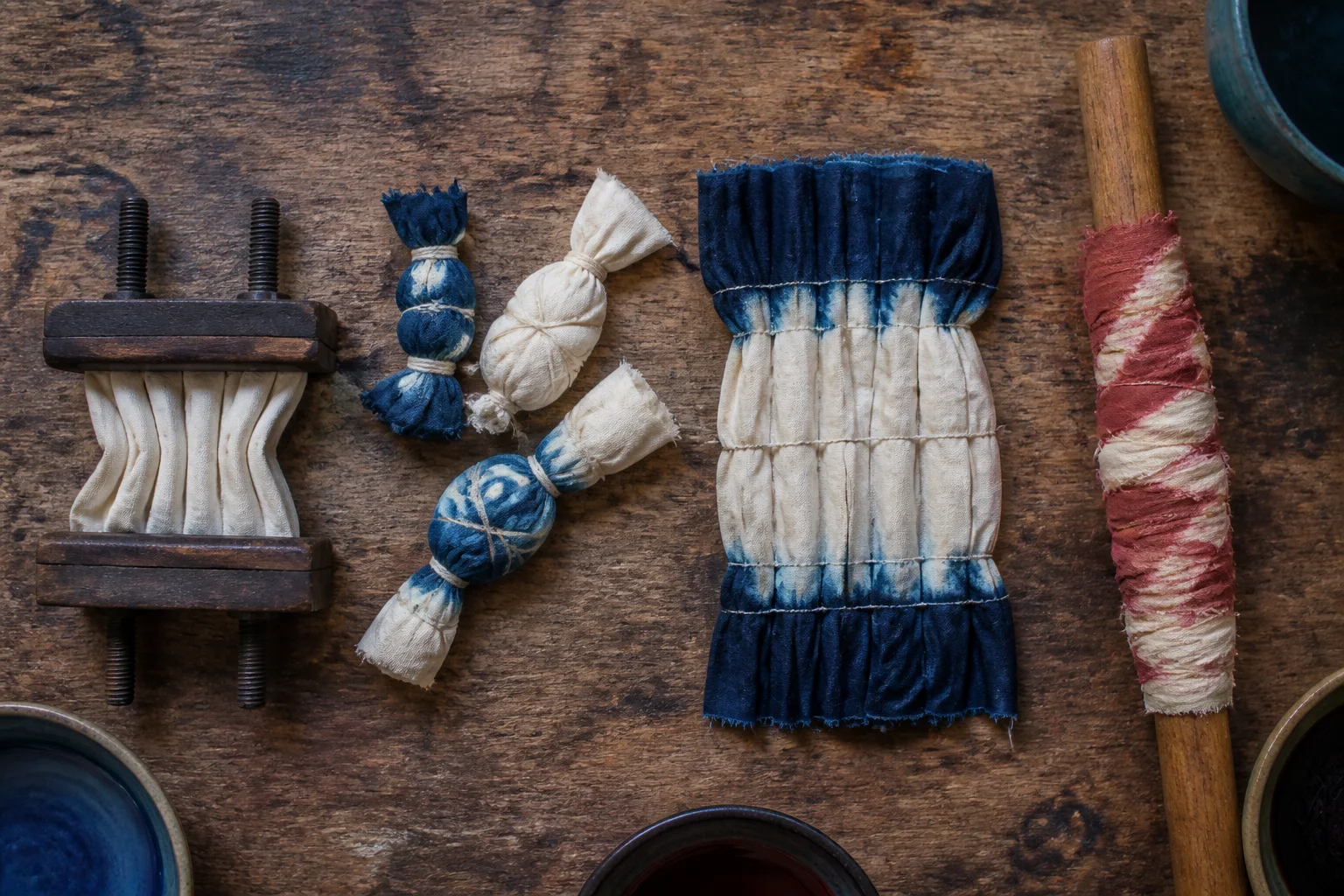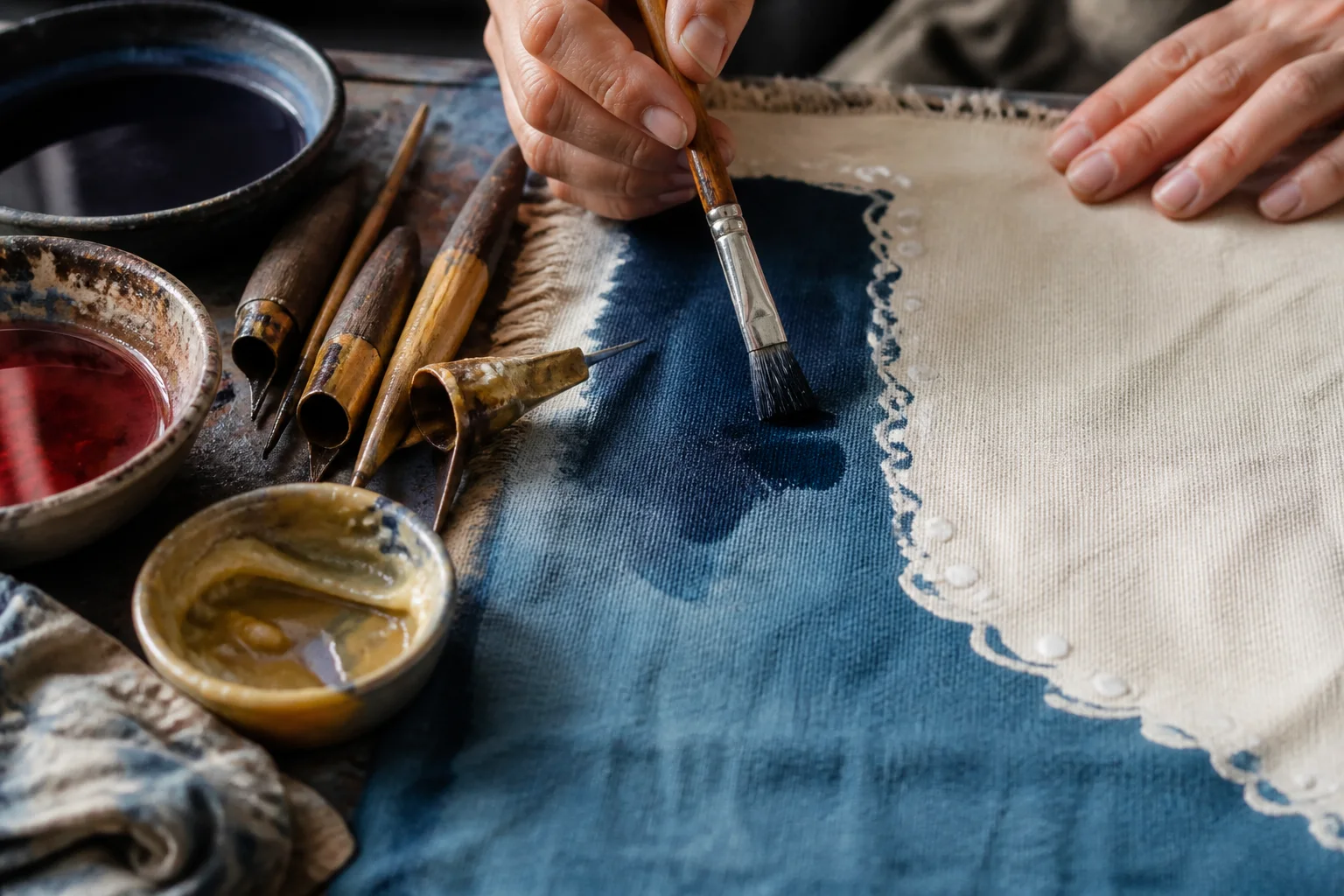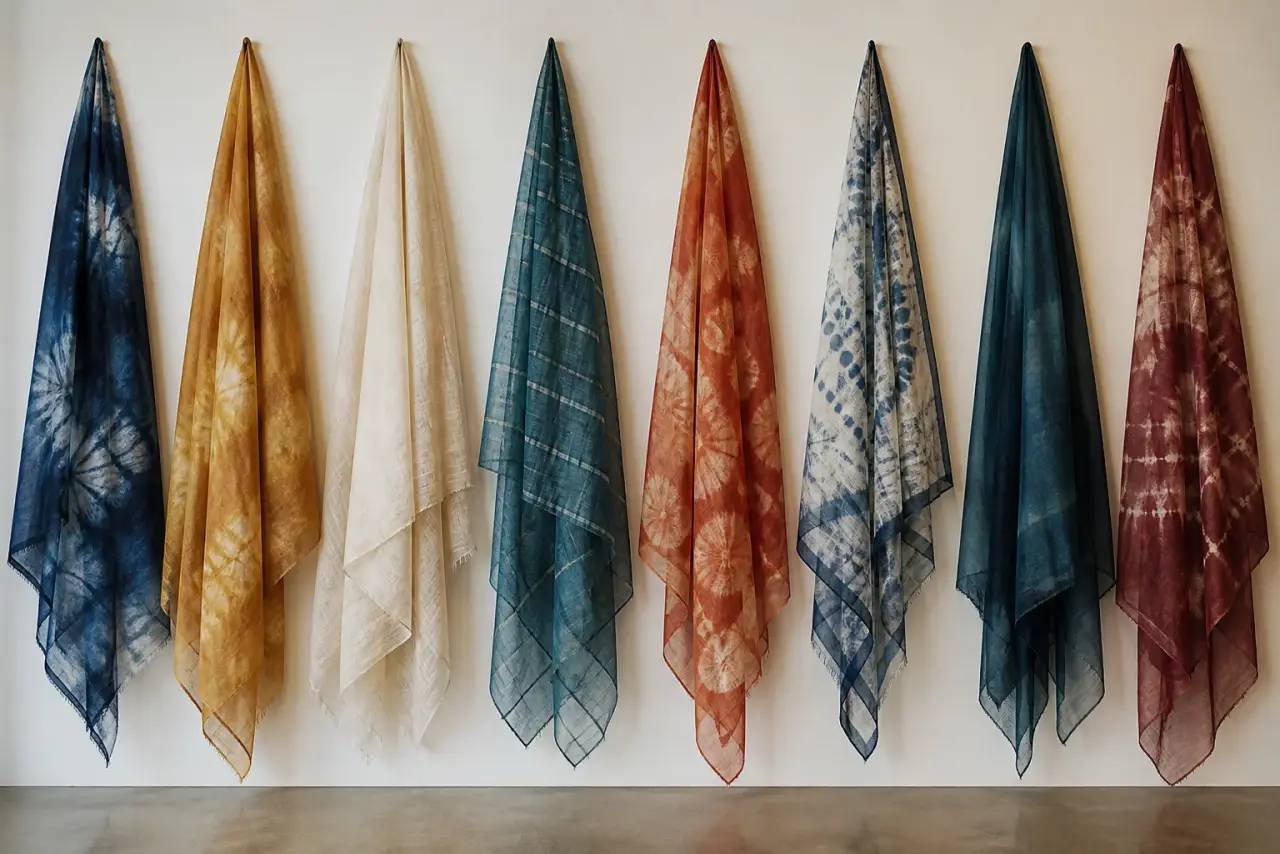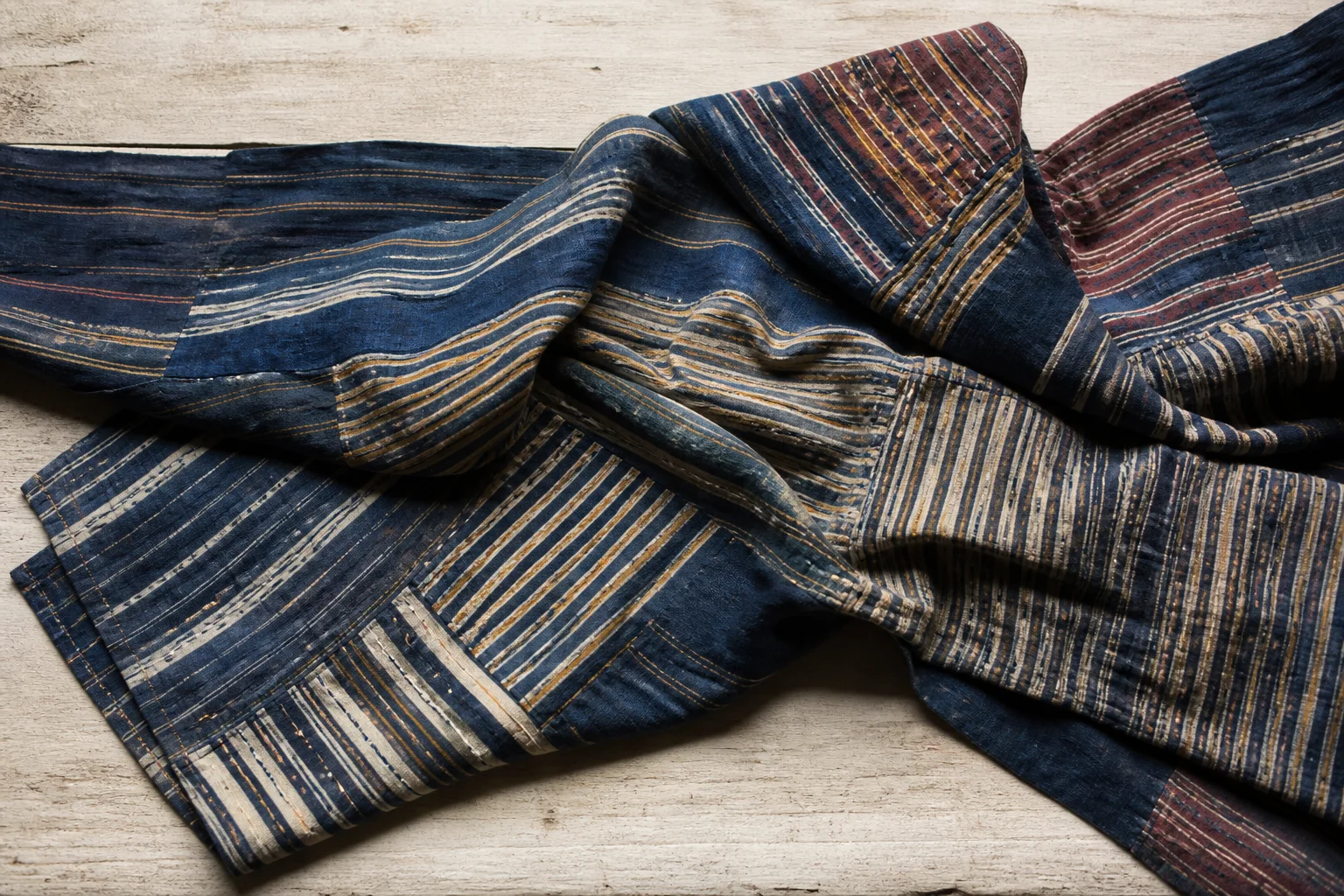
Stripes can be planned, compressed, stitched, wrapped or simply revealed by how a cloth was folded. Their rhythm is a useful entry point, not a complete process record.
Follow the line
Compare width, interruption and direction. A stripe that stays even across a fold tells a different story from one that breaks at a seam or bundle.
Stripes ask one more question once they repeat in two directions: how does a sett become cloth? The Scottish Register of Tartans, kept in Edinburgh, treats this as a matter of record rather than guesswork. A search by surname returns every sett recorded for that clan or family, and a regional search lists setts tied to a district, a county or an island group, which suits wearers with no clan connection. Each entry carries a threadcount that reads like a weaving draft and can be matched against cloth before cutting. The desk has kept a dated note on reading a tartan threadcount, laid out in the order a maker would follow, from first lookup to sizing and care.
- Measure rhythm visually
- Check the fold direction
- Notice interruption
Keep technique plural
The same visible cue can be produced by adjacent resist families. A careful guide offers a comparison and names the evidence still missing.
A related note asks what a flat print does on a curved surface, where a seam or an overlap can break a repeat.
- Link to multiple families
- Use an evidence grade
- Avoid a single-look verdict