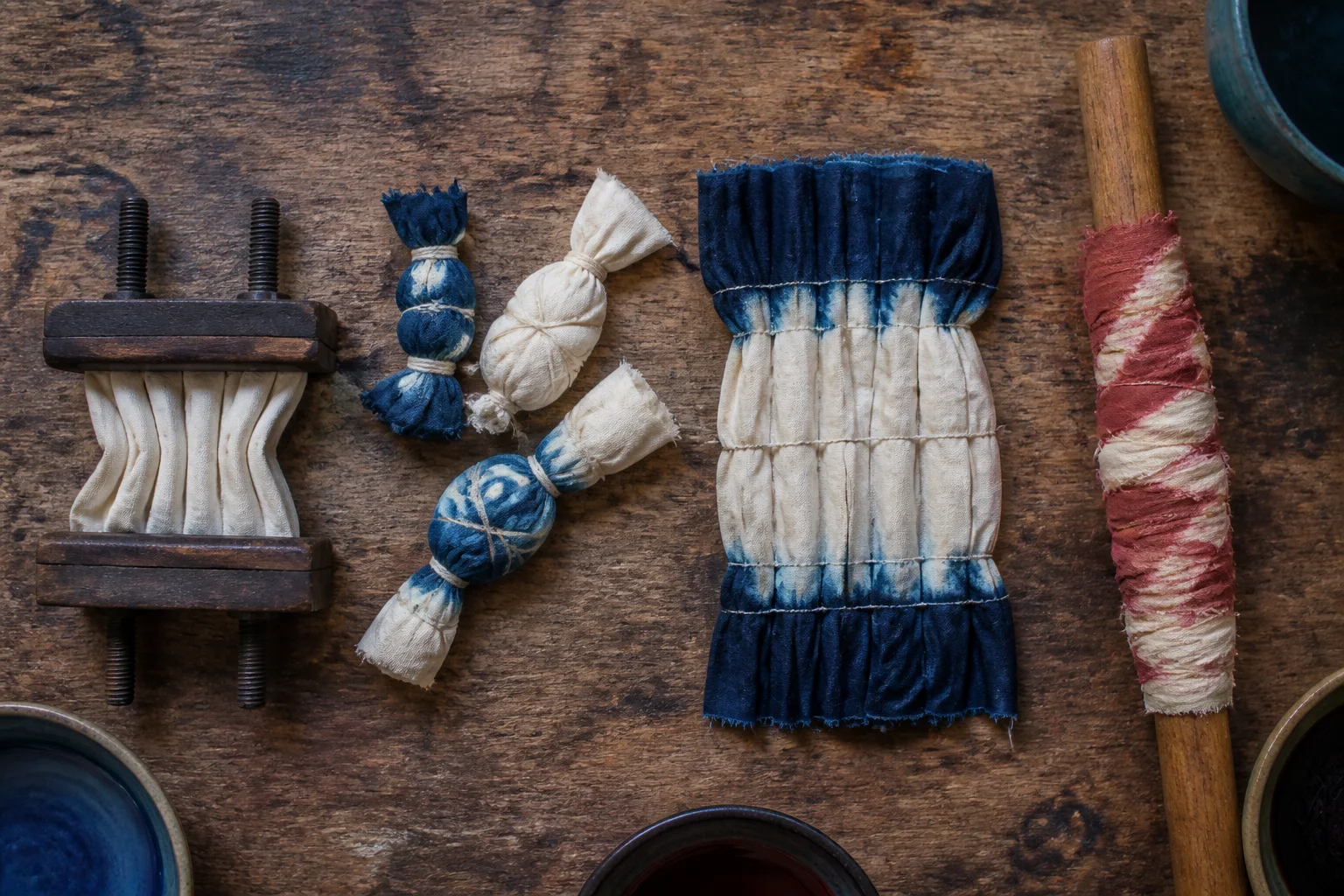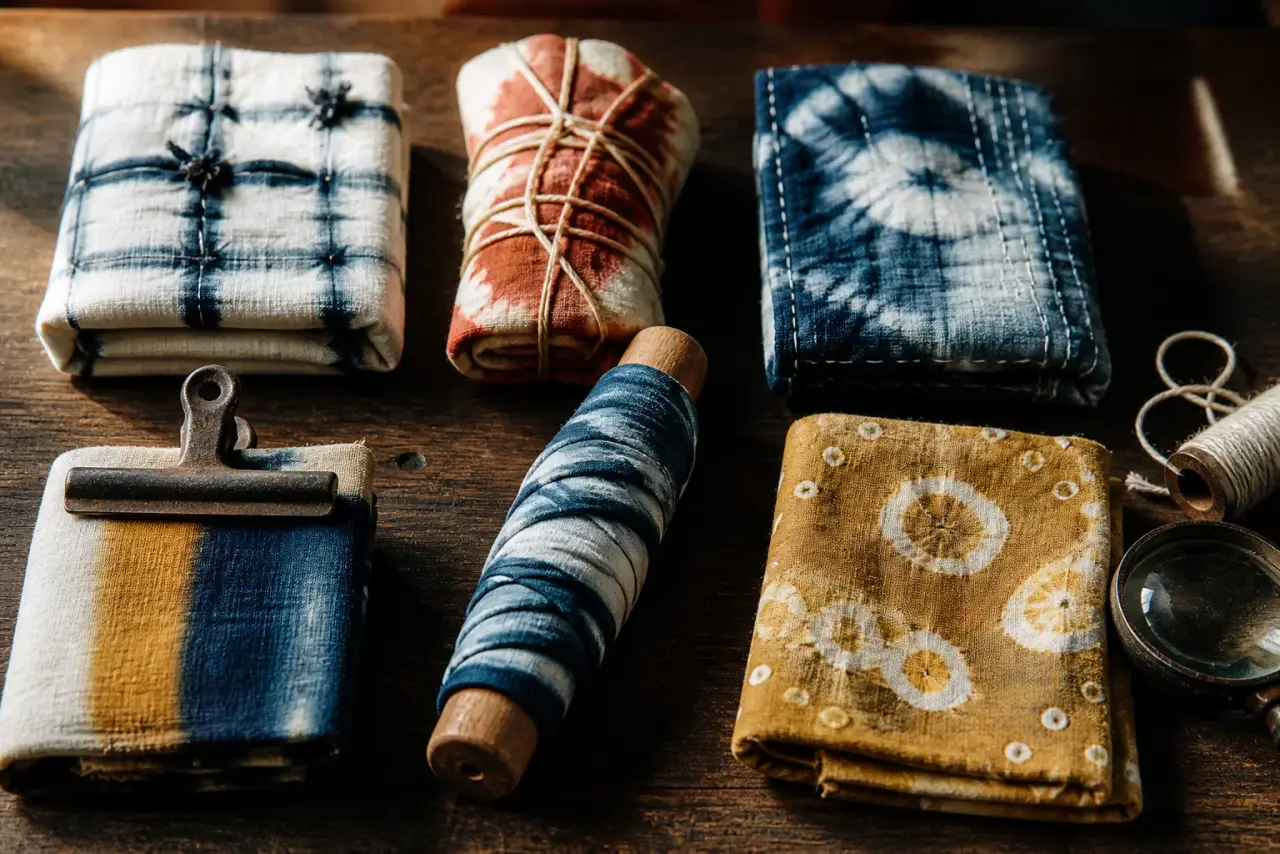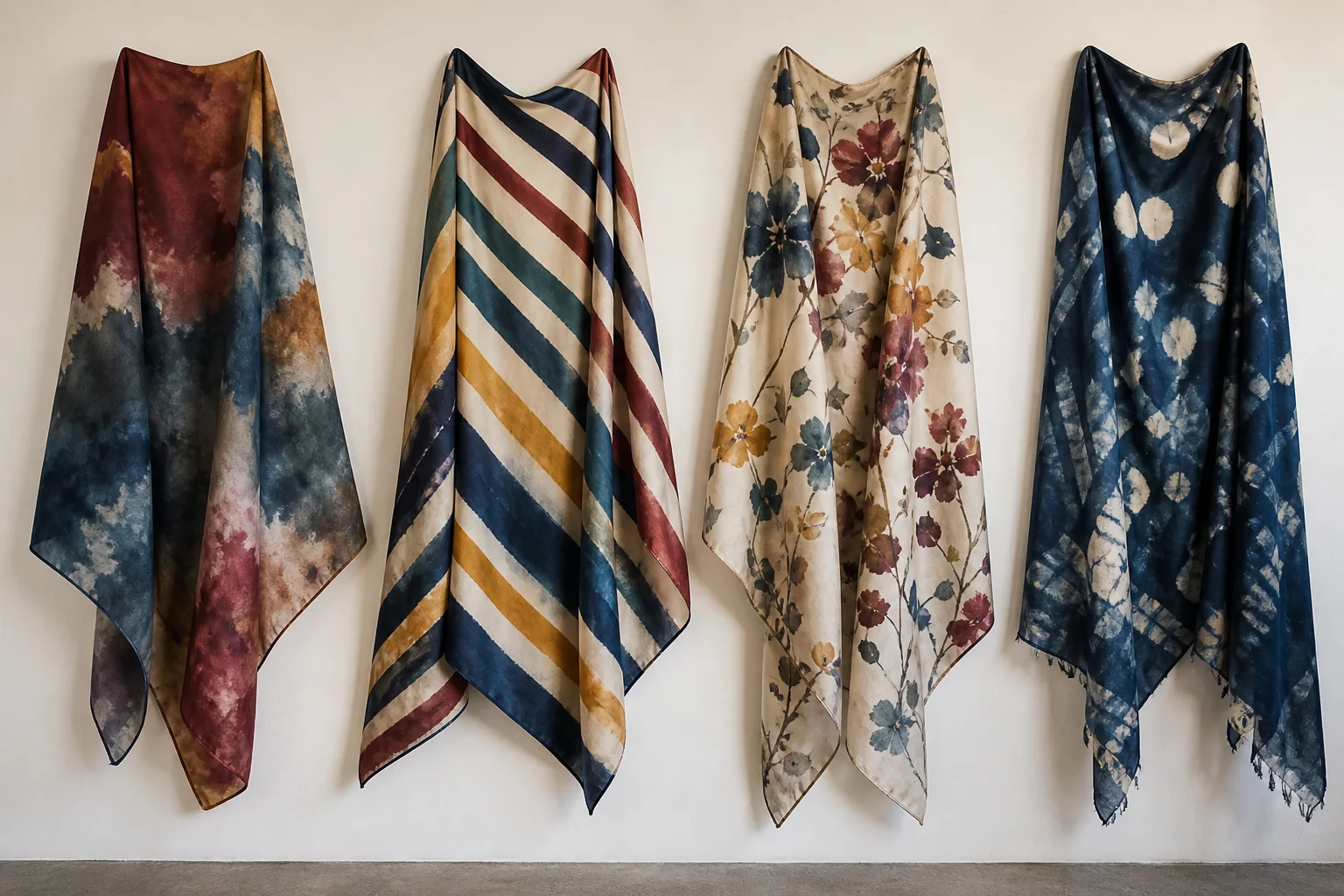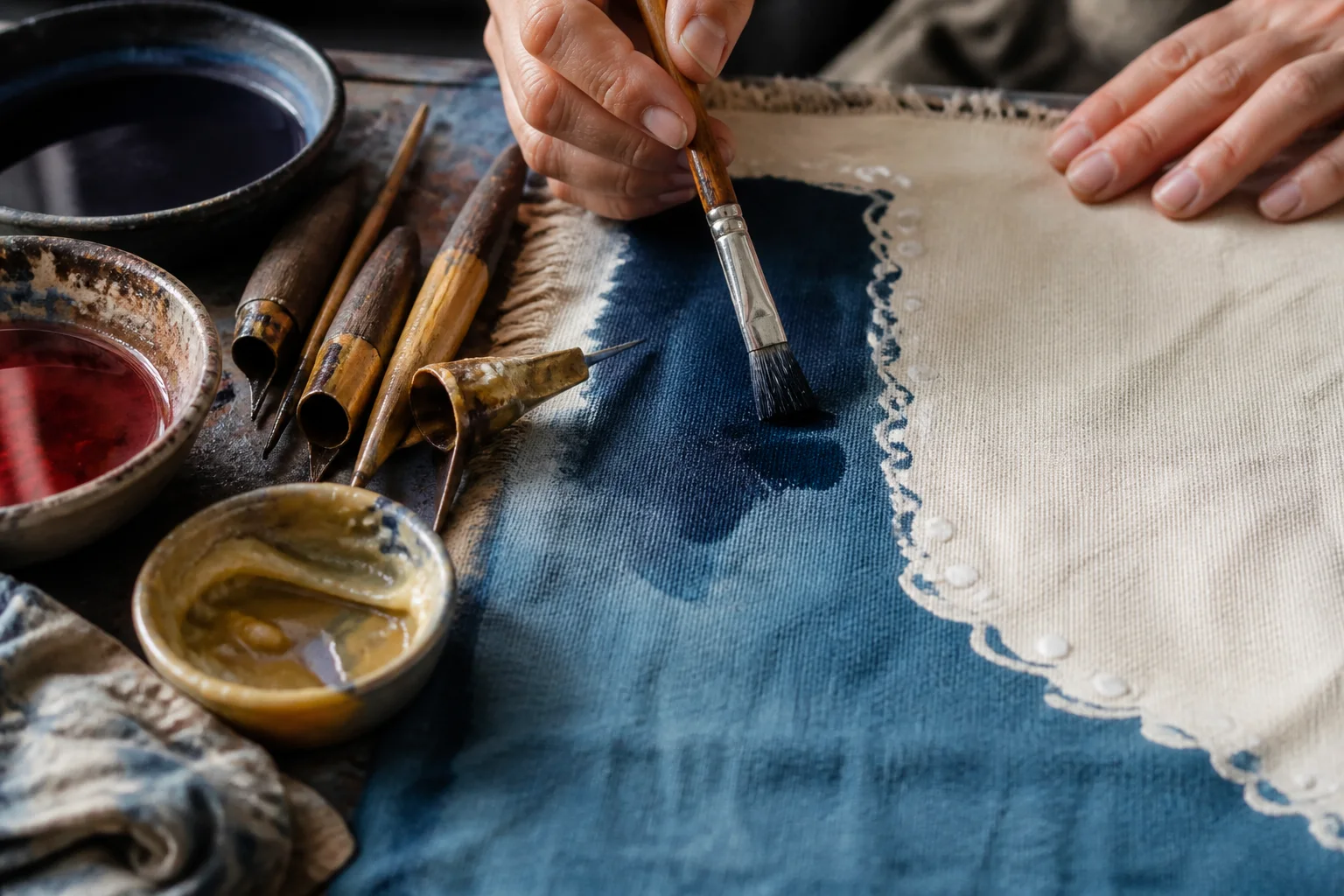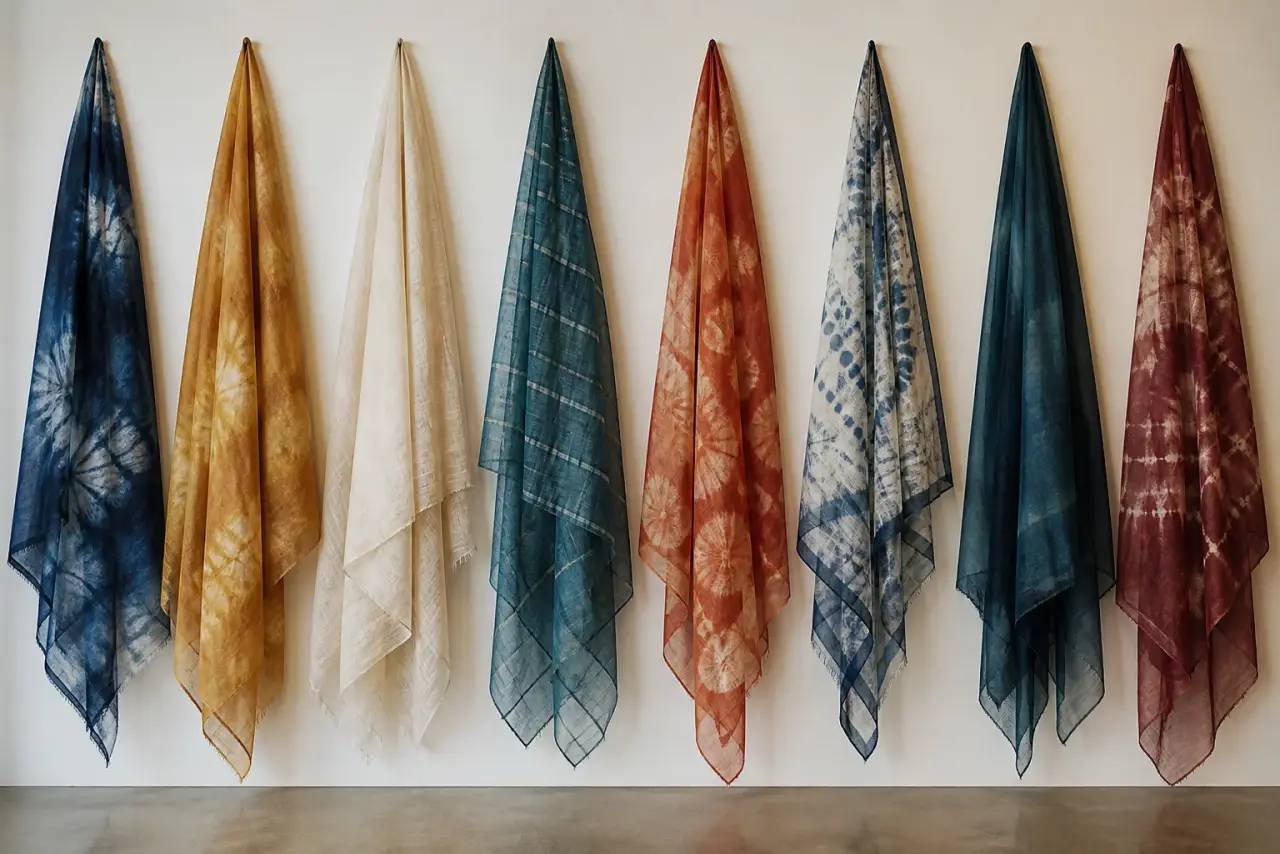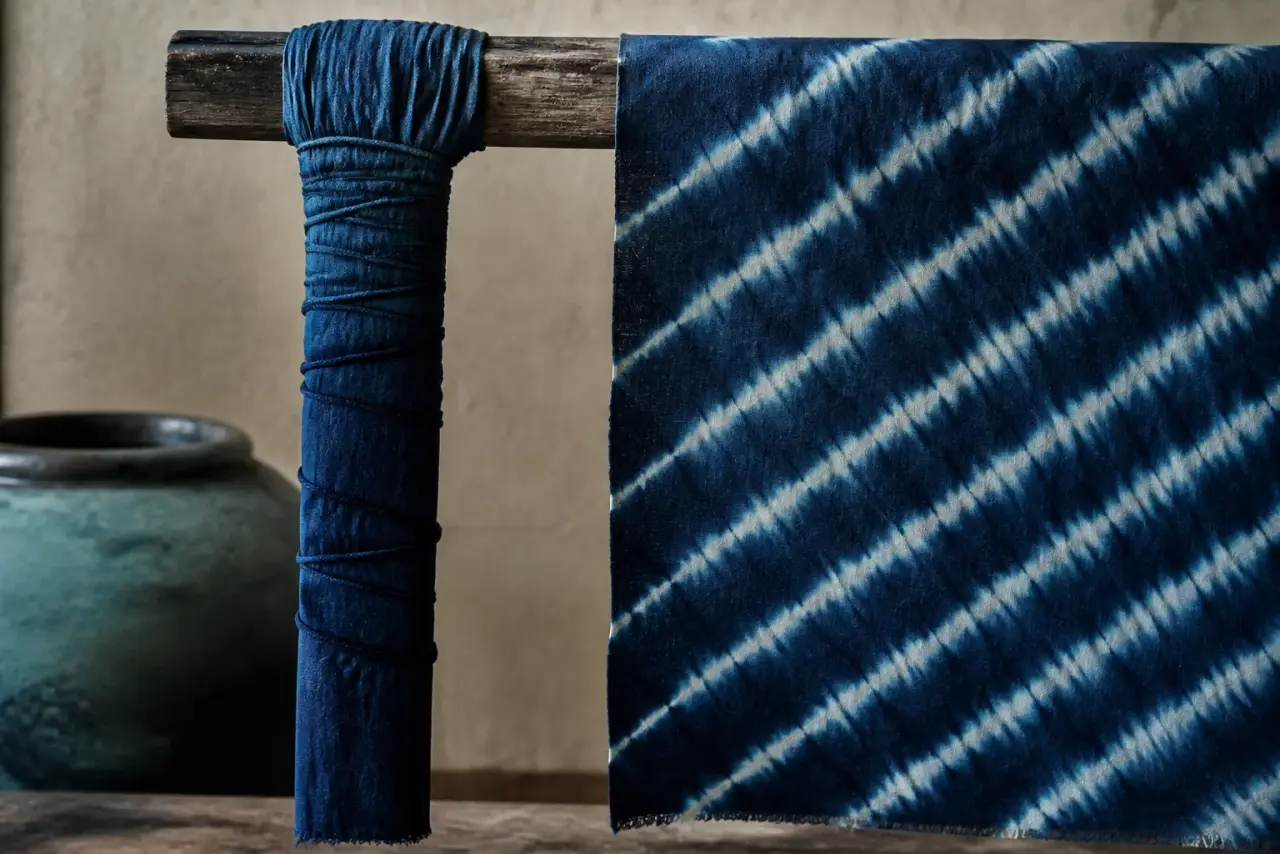
Arashi is a useful case for separating a recognisable diagonal rhythm from a confirmed process. The pole, compression and opened cloth make the question visible.
Read the diagonal
Pole-wrapped cloth can create directional pleats and broken movement, but a photograph of the finished scarf may not show how the cloth was held. Treat the diagonal as a cue, not a verdict.
- Look for repeated compression
- Compare the fold direction
- Check the reverse if available
Connect image to record
A technique name becomes stronger when a source describes the manipulation. The index keeps arashi beside other families that can produce a related visual rhythm.
Wrapping asks the same question from the printer's side: a pattern that wraps around a form follows cut lines, overlap and motifs that still read on a curve.
- Keep the source ID
- Compare adjacent families
- Do not authenticate from a look