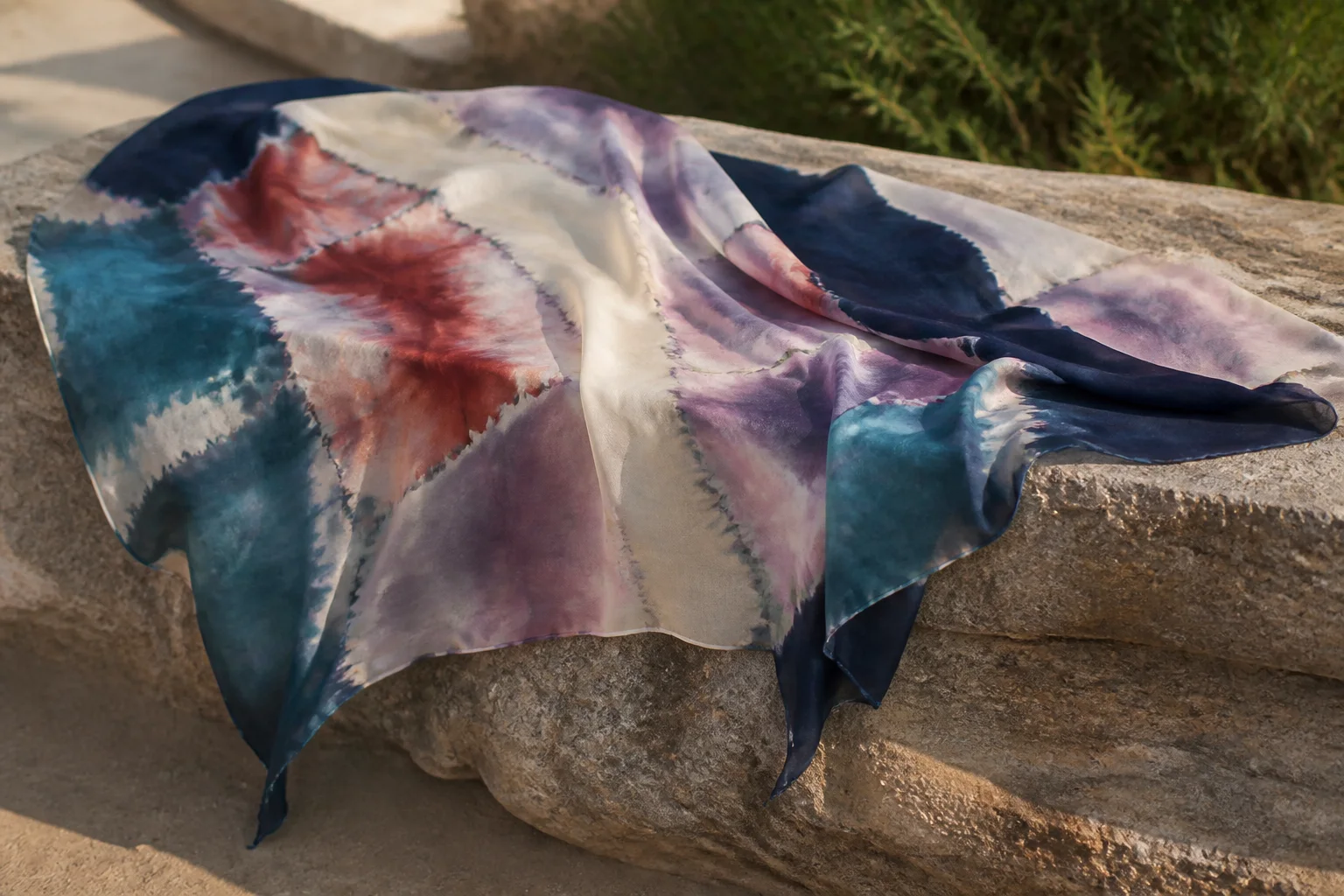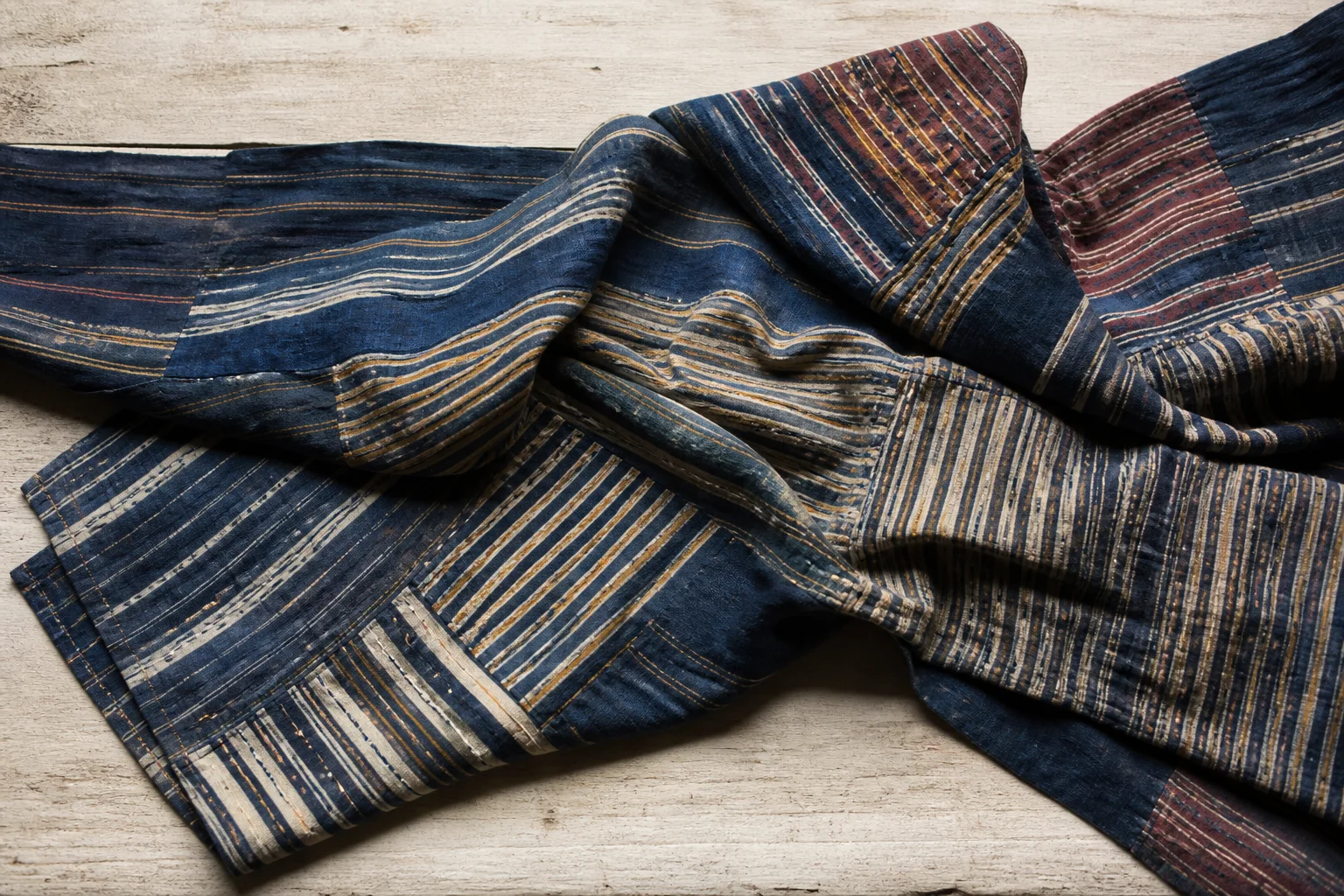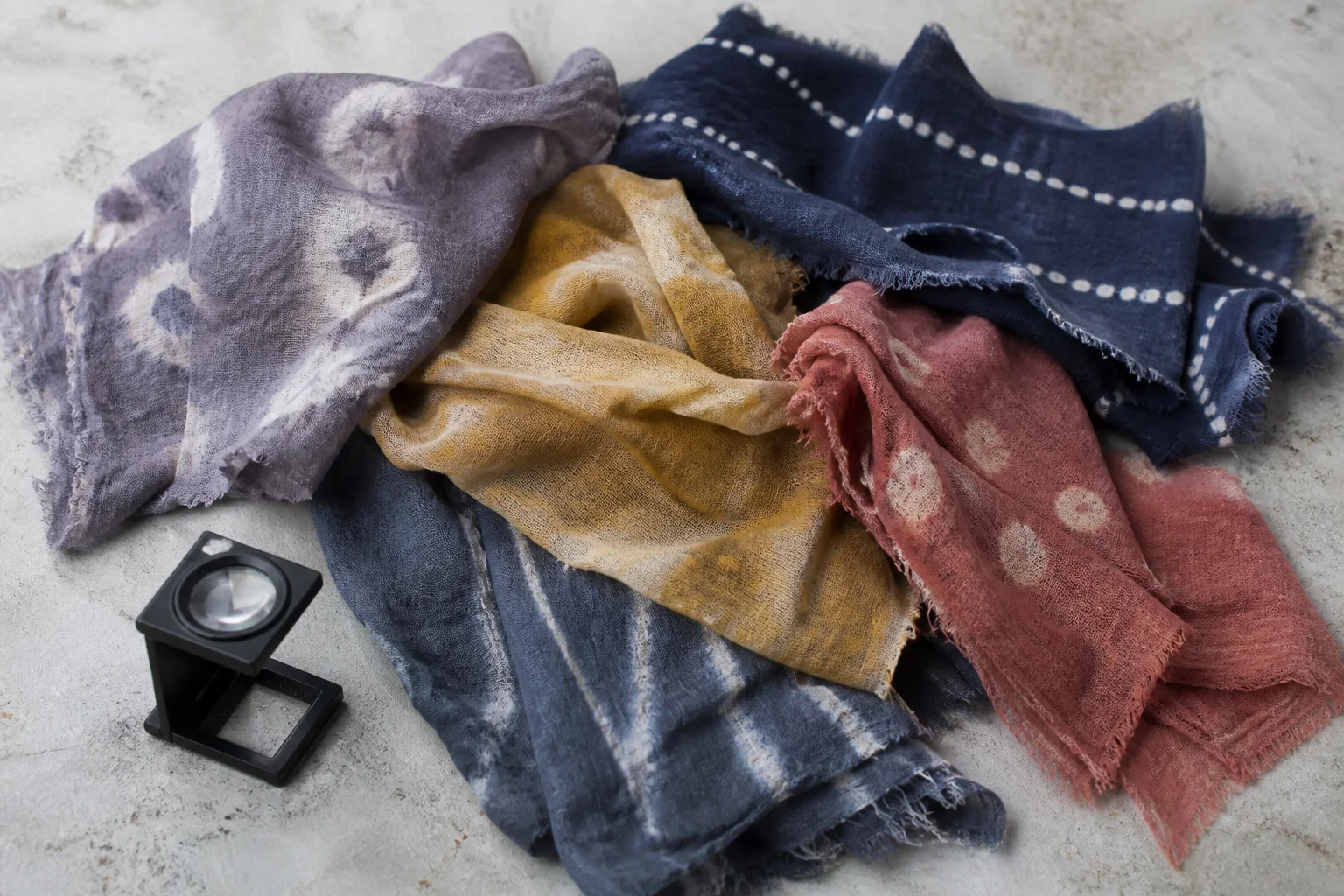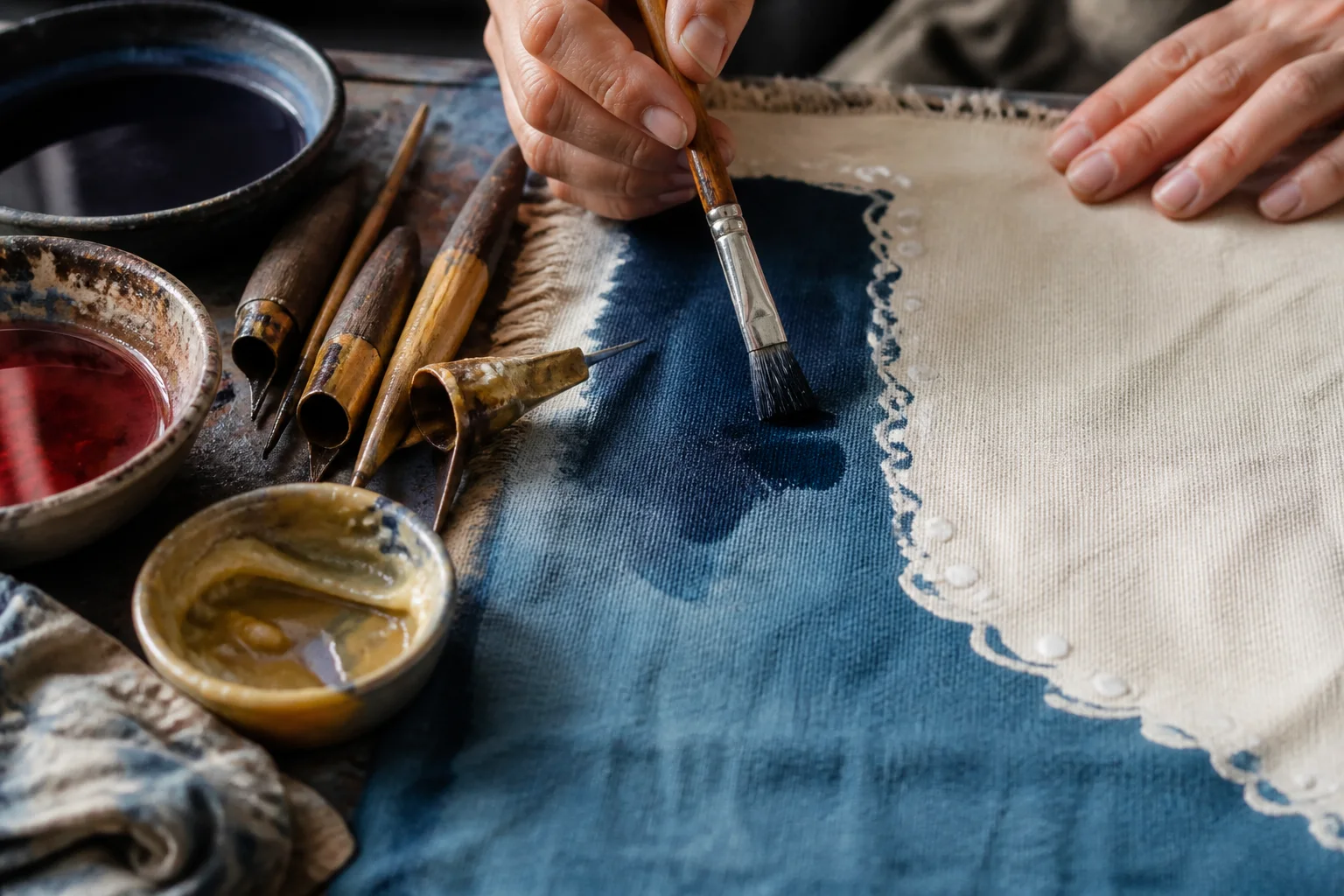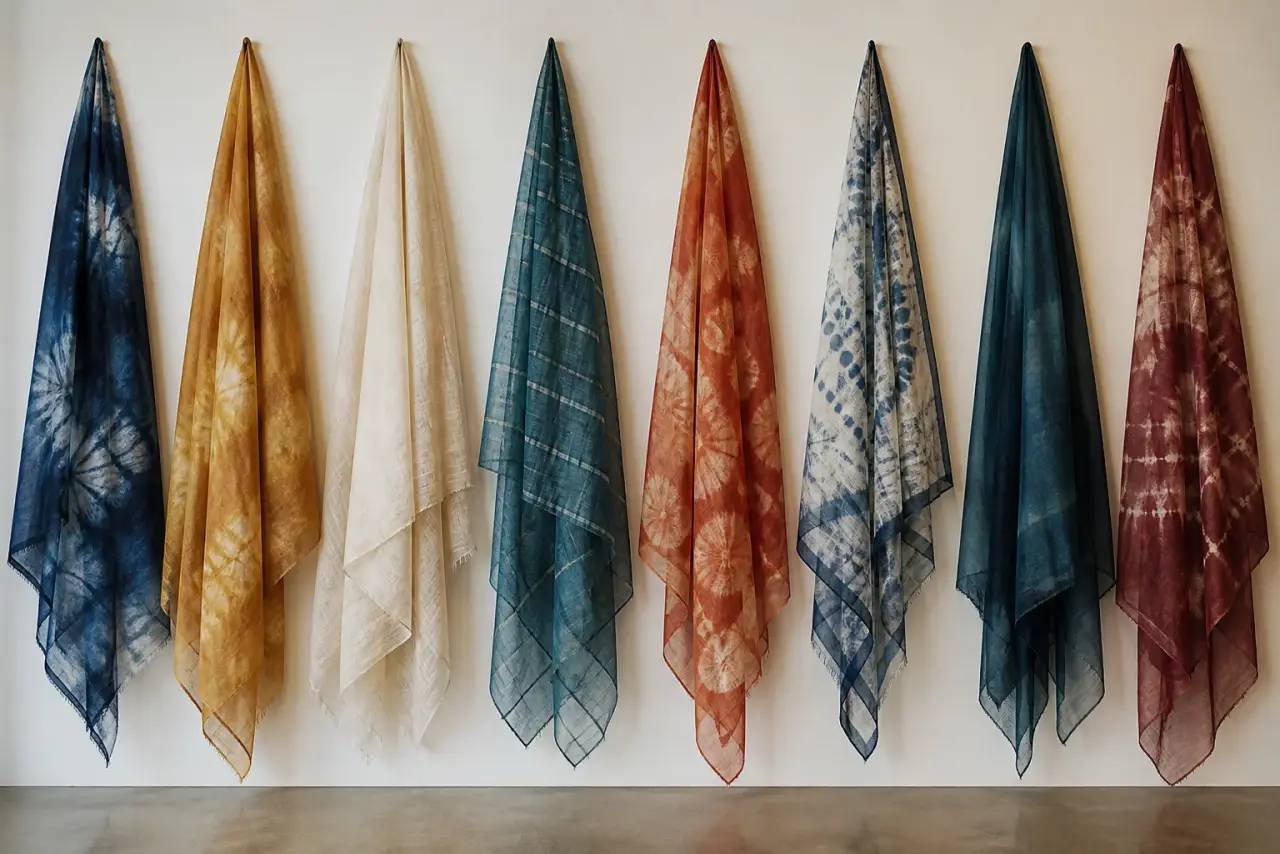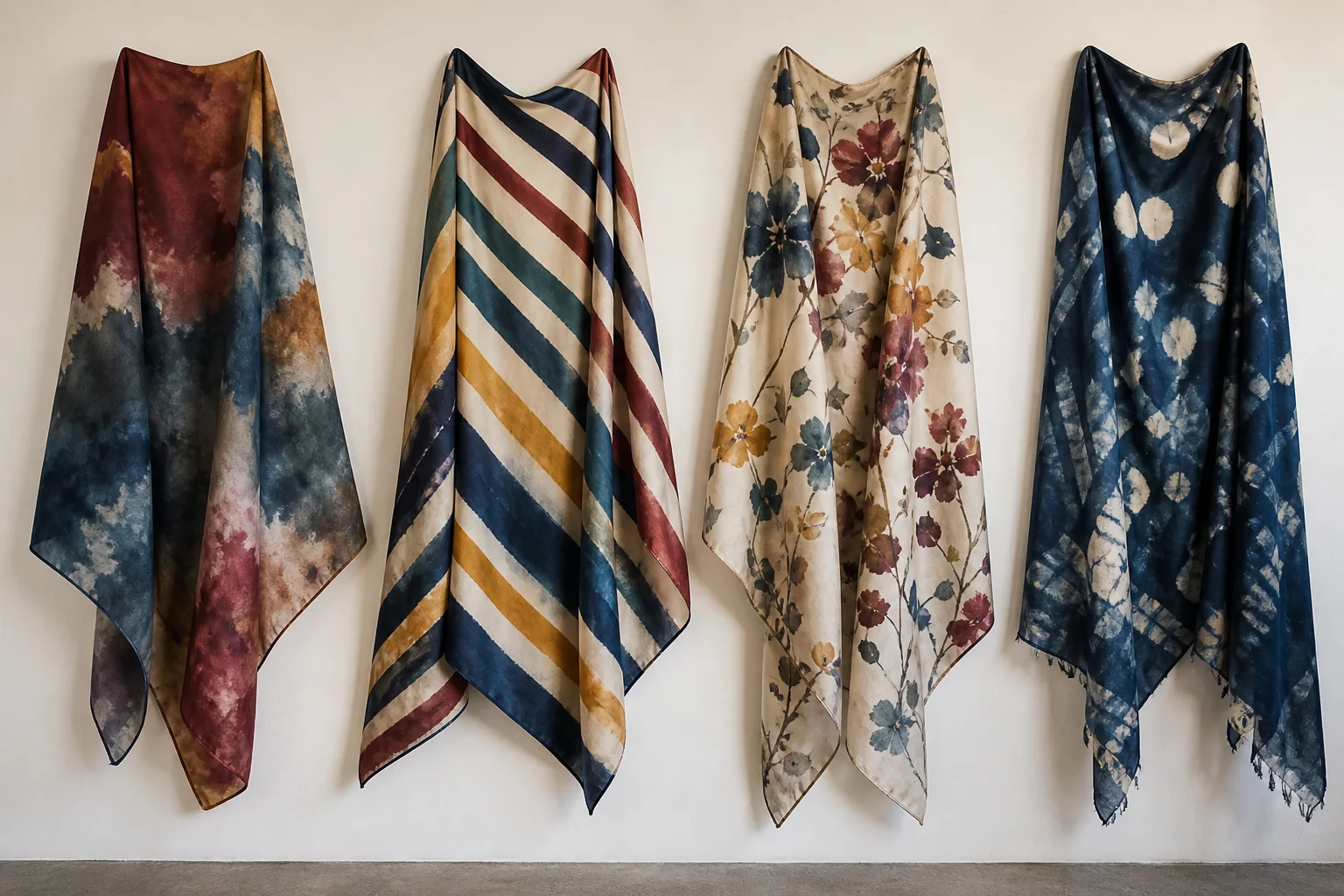
Pattern names can help a reader enter a collection, but they should not hide the structure underneath. Compare rhythm, edge, scale and colour sequence before reaching for a technique label.
Use a common lens
A scarf-facing comparison works when each piece is asked the same small set of questions: where does the repeat begin, how does the edge behave, and what changes when the cloth moves?
A first strung piece is easier to plan than to improvise. The Resist & Form desk keeps a dated note, 'Choosing beads for a first piece', that starts from one dominant bead type in a size the hand can thread without strain, usually a seed bead in 11/0 or a 4 mm round, then reads dimensions, hole and finish off the material sheet before anything is bought. The piece is then planned backwards from its weakest join, the point where thread, clasp and crimp meet under load, which is rarely the bead itself. That habit of planning from the weakest join suits anyone already keeping records for cloth, tools and dye baths.
Attachment decides how a scarf sits before the cloth is even cut. A magnet pair holds a folded corsage flat against wool or felt, no hole left behind. A pin passes through the weave and closes at the back, which suits a lighter ground. A the corsage binding point gathers stem, wrap and fastening into one place, so lapel, hair and ear each pull from the same anchor. The Resist & Form desk sets out all three in its journal note, and the choice comes before the build, not after.
- Compare the repeat
- Read the empty space
- Follow the edge
A pattern family is not a proof
Abstract, floral and stripe are descriptive groupings. They do not confirm whether colour was folded, stitched, clamped, painted or layered through several processes.
- Keep mechanism in the index
- Name the source
- Leave uncertain cases open