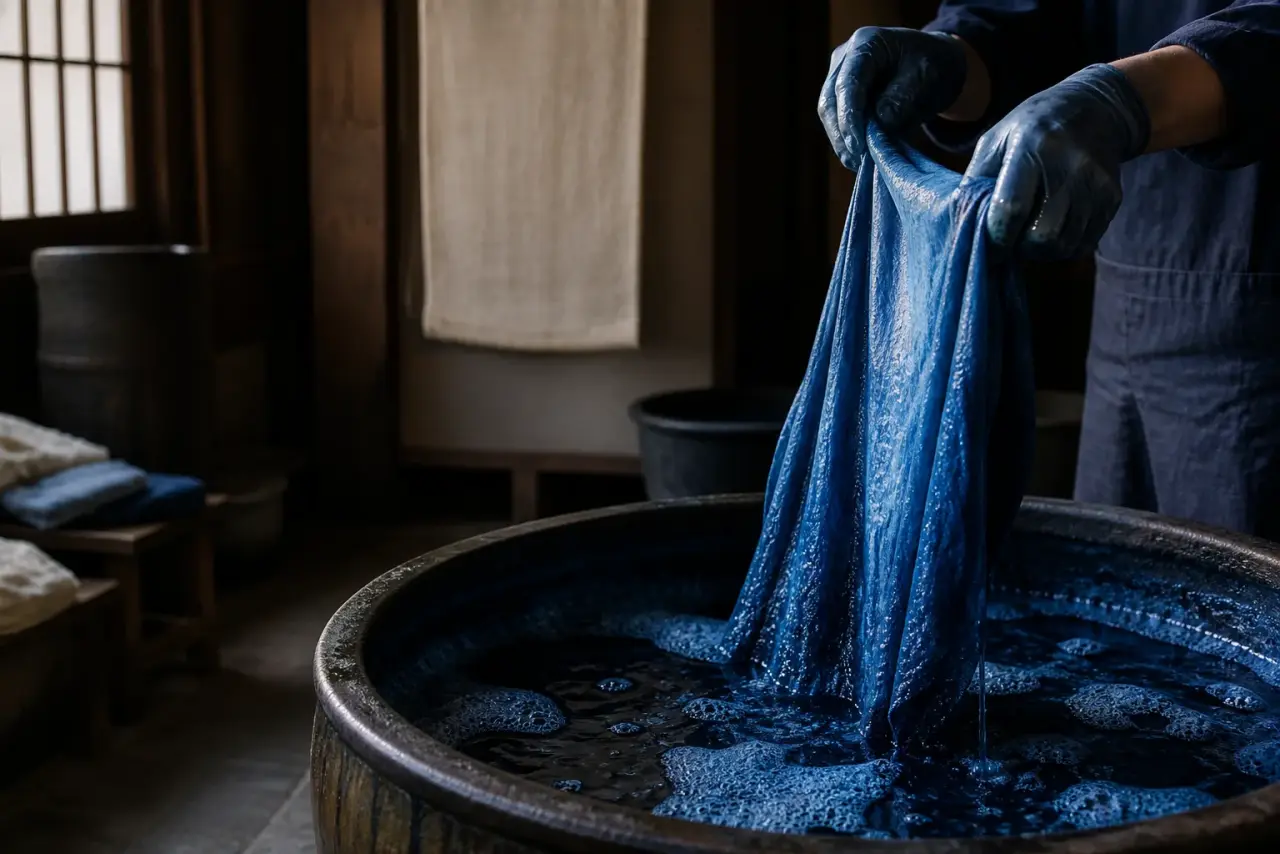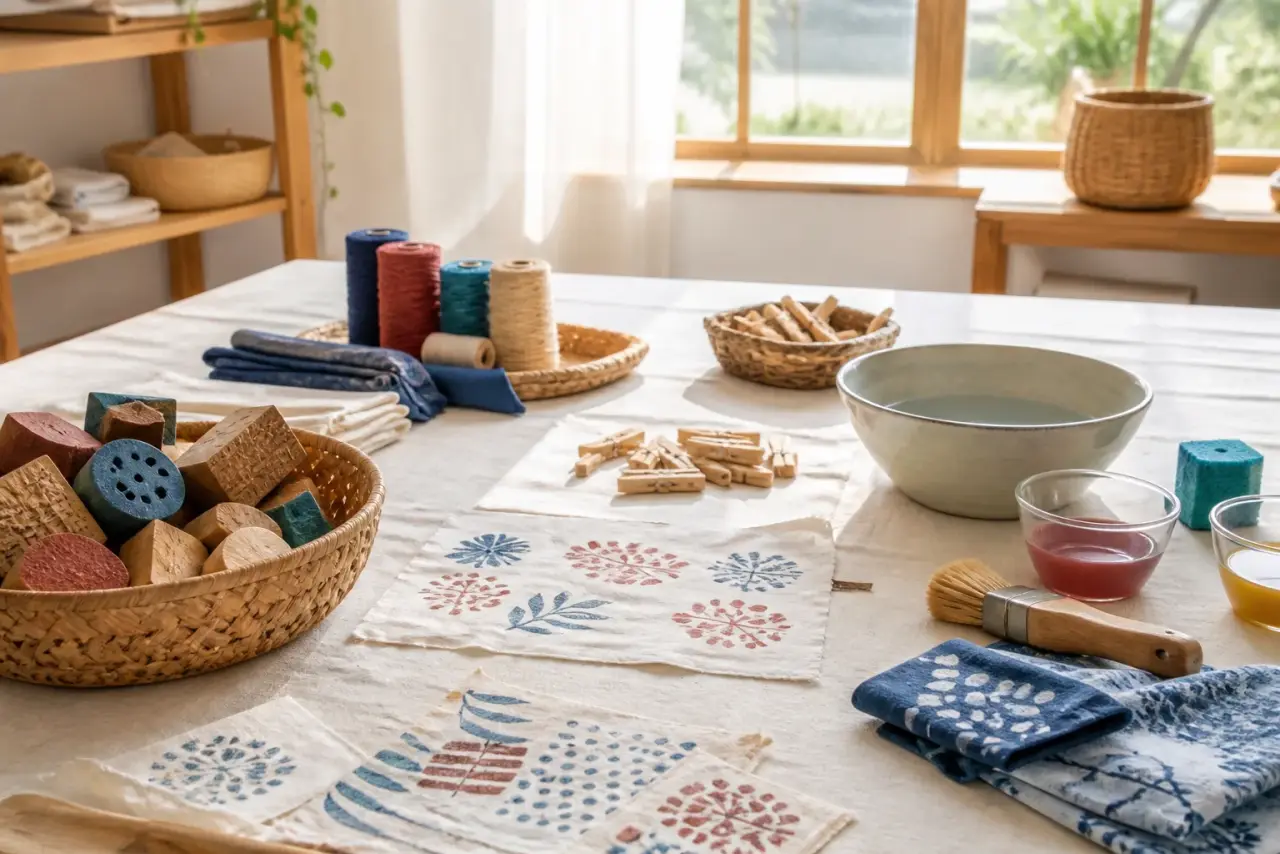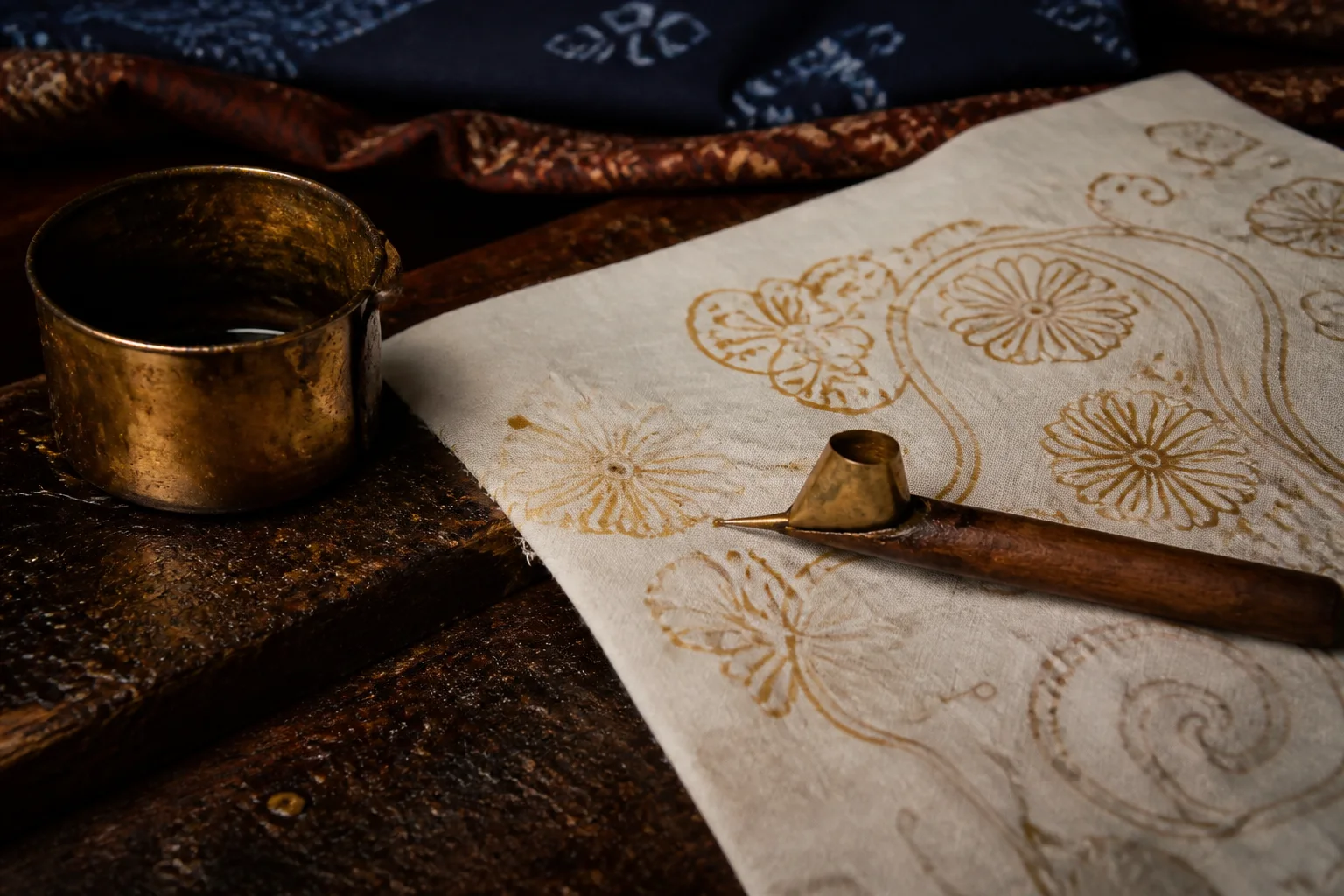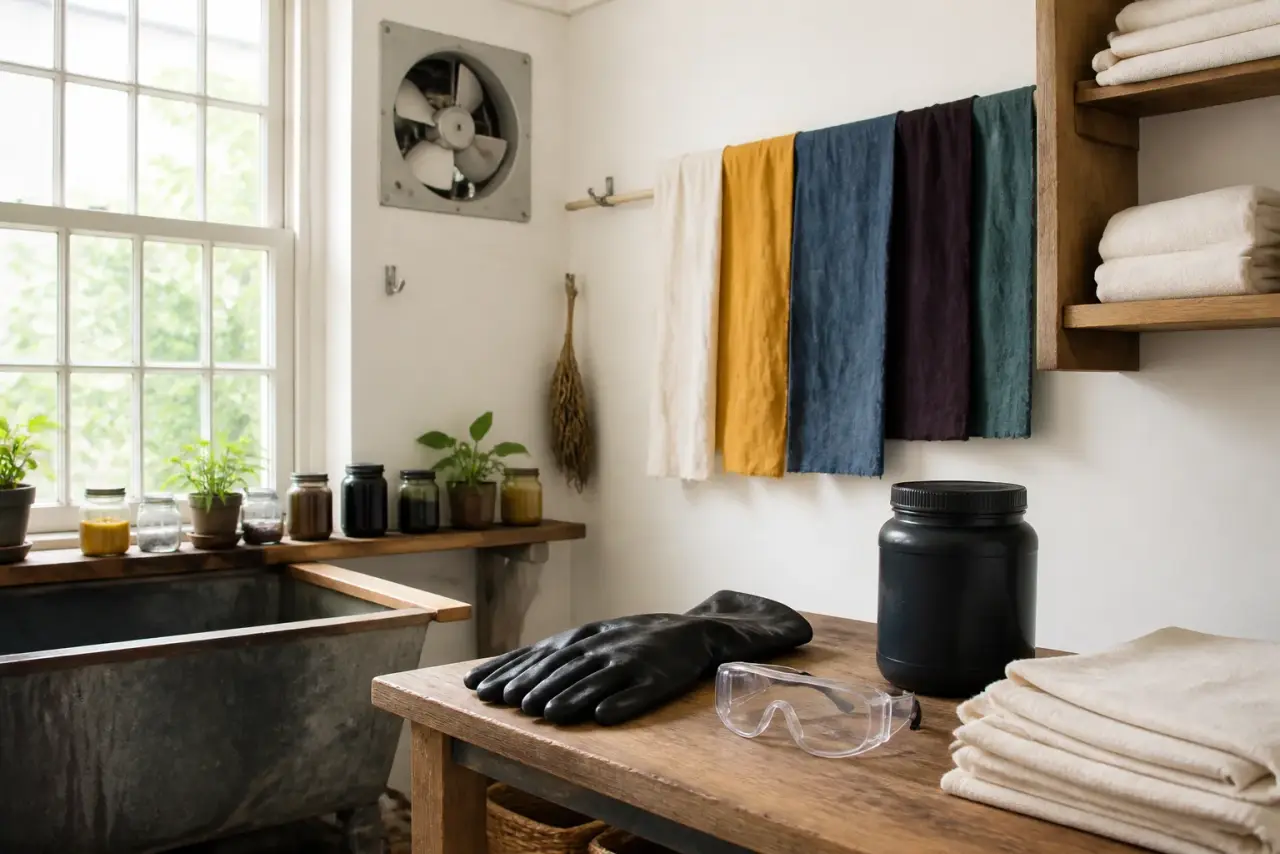
Safety starts with knowing the exact product and how it will be used. The studio checklist points to the label, SDS, ventilation and local rule instead of pretending one web recipe covers every formulation.
Before opening
Identify the product, read its current label and locate the safety data sheet. Then look at exposure route, ventilation, protective equipment, storage and spill response for that formulation.
Safety work in a dye studio ends where the record keeping begins, and records need to be read. A vat log, a recipe card or a colour note is only useful if the chair beside it is lit well, which raises the same question readers ask about lighting a reading corner: how much light, of what kind, and where. A dated journal note from the Resist & Form desk treats light as a stack of jobs, ambient fill first, task light second, accent third, and separates the three plain figures involved. Lumens measure output, kelvin measures warmth or coolness, and colour rendering measures how faithfully a swatch shows its true shade.
- Name the product
- Read the SDS
- Check airflow and surfaces
Do not generalise the hazard
A compound record, an industrial report and a home-studio situation do not describe the same exposure. Keep the jurisdiction and context beside every safety point.
- Label US guidance
- Follow local requirements
- Do not promise disposal advice