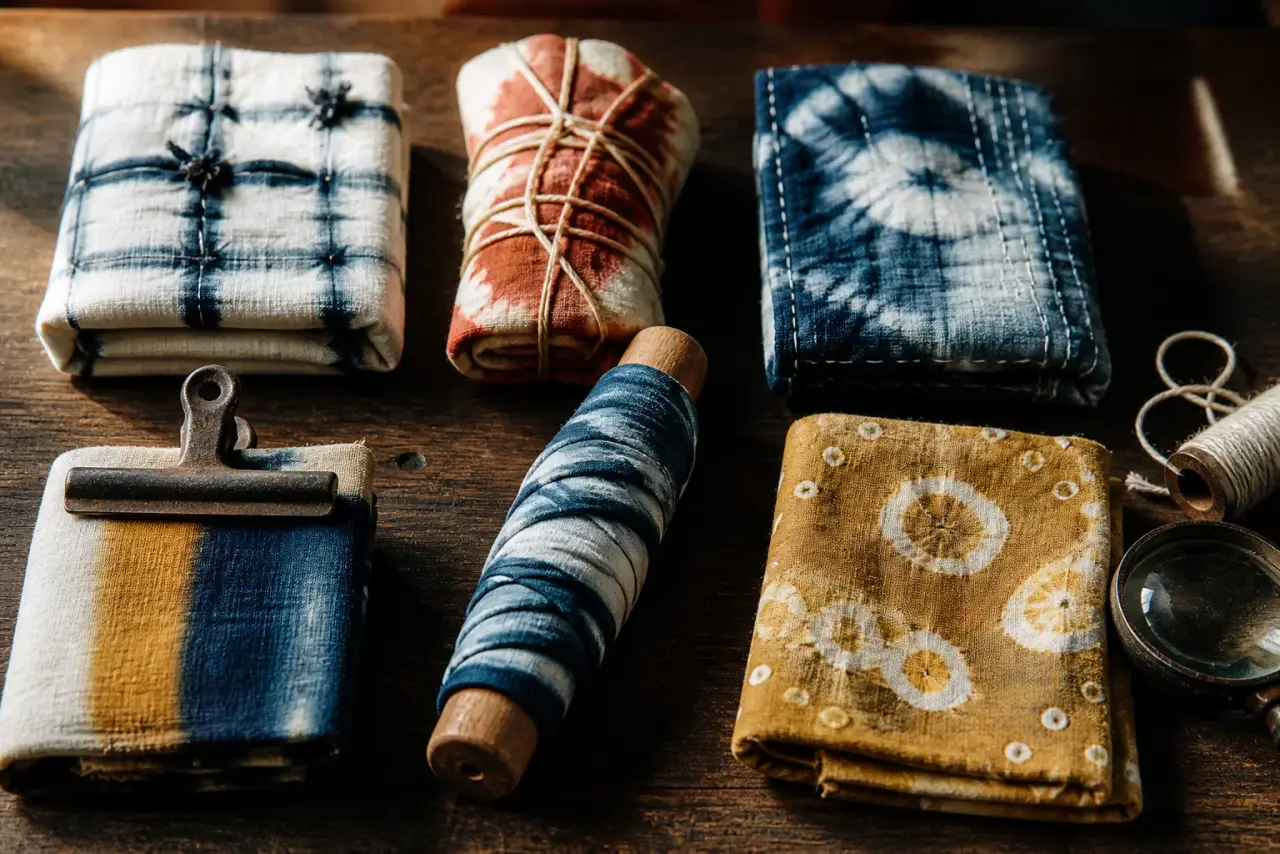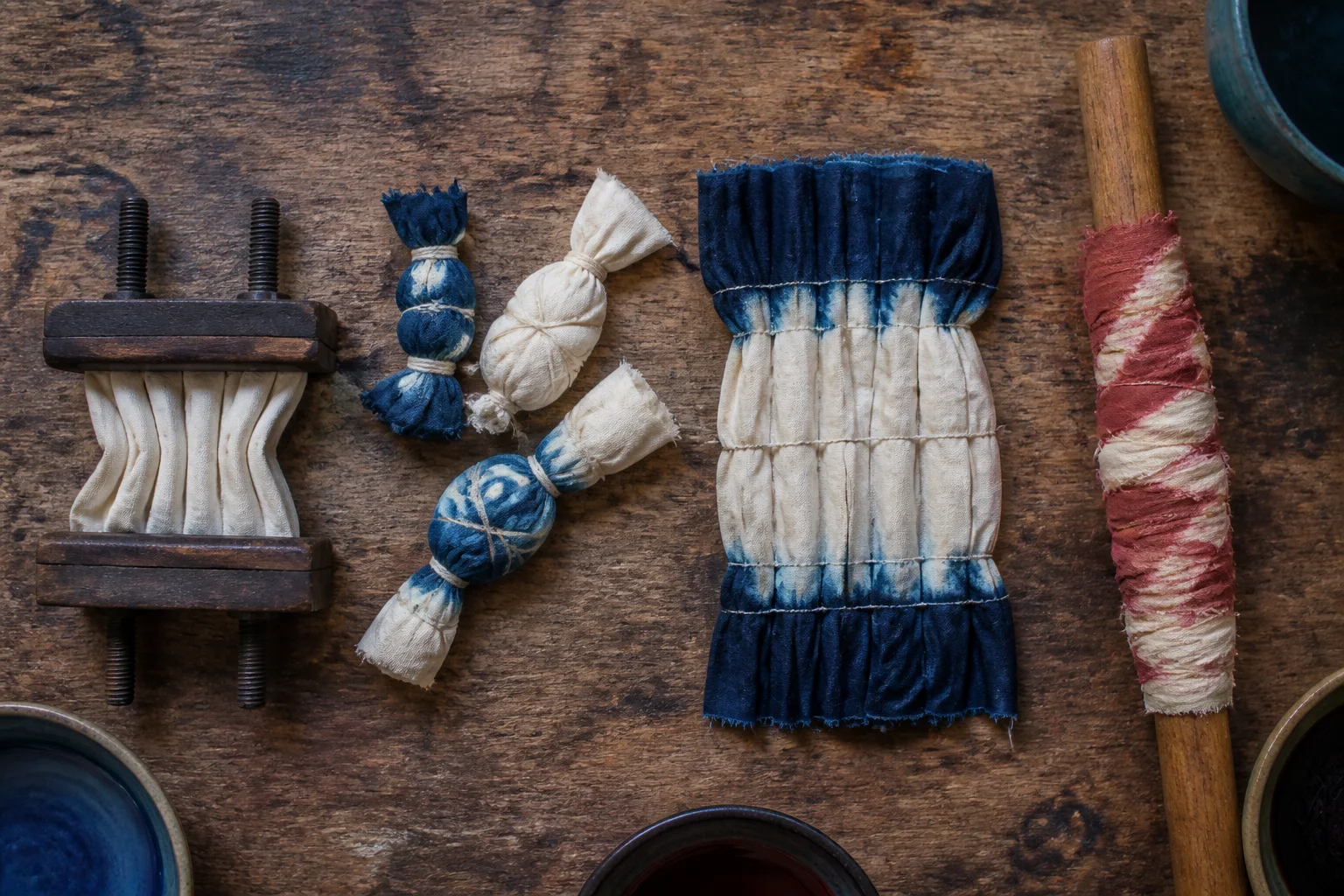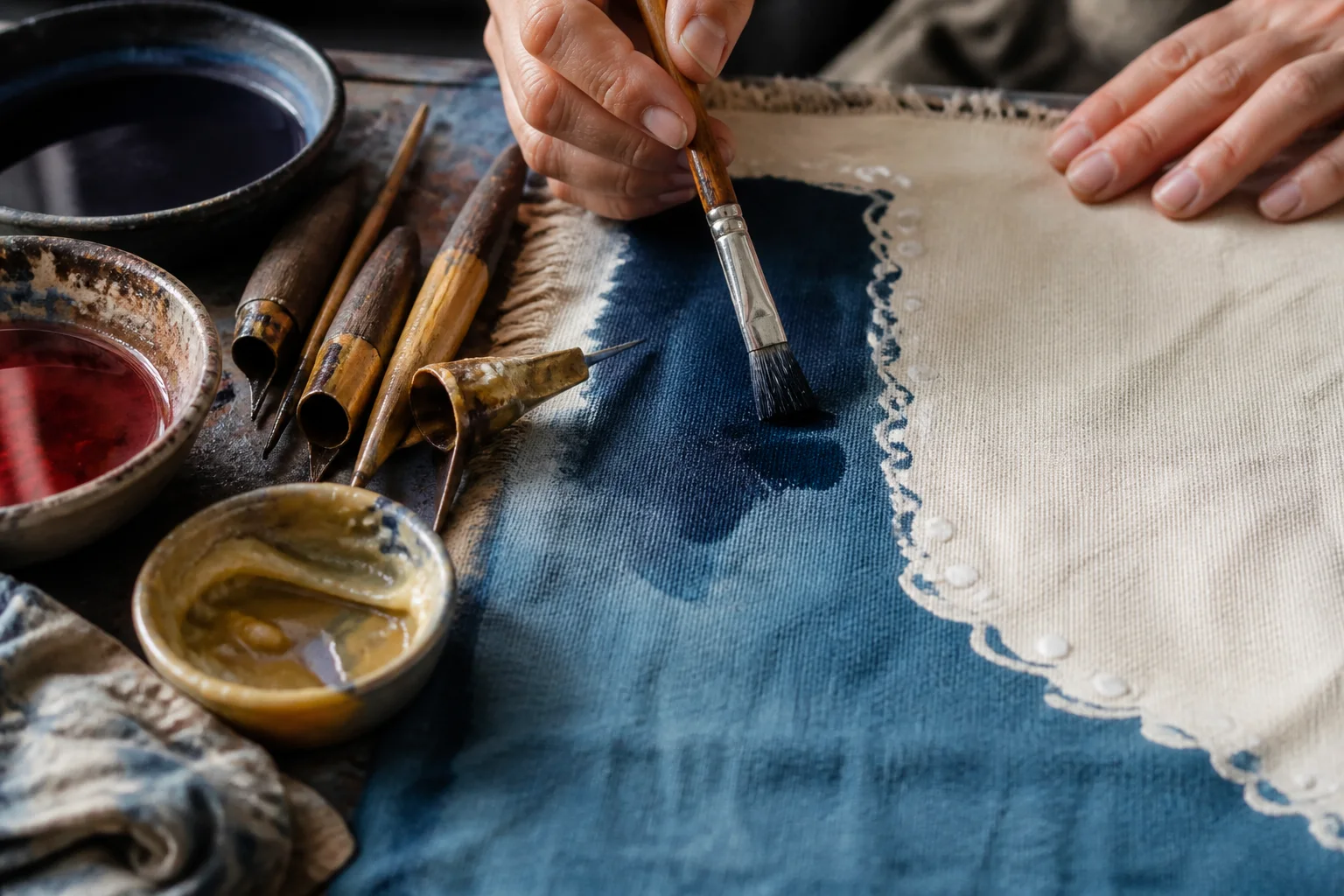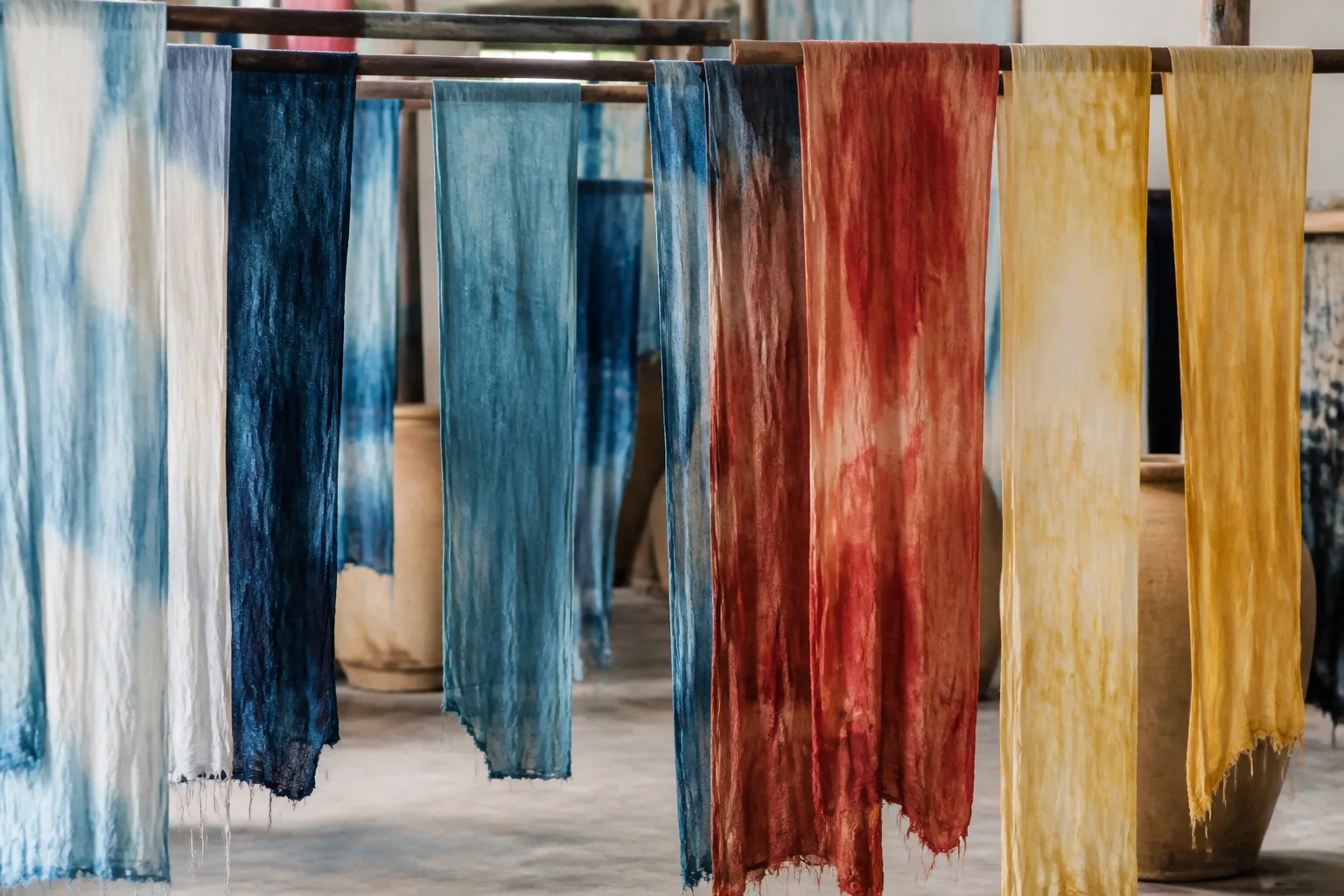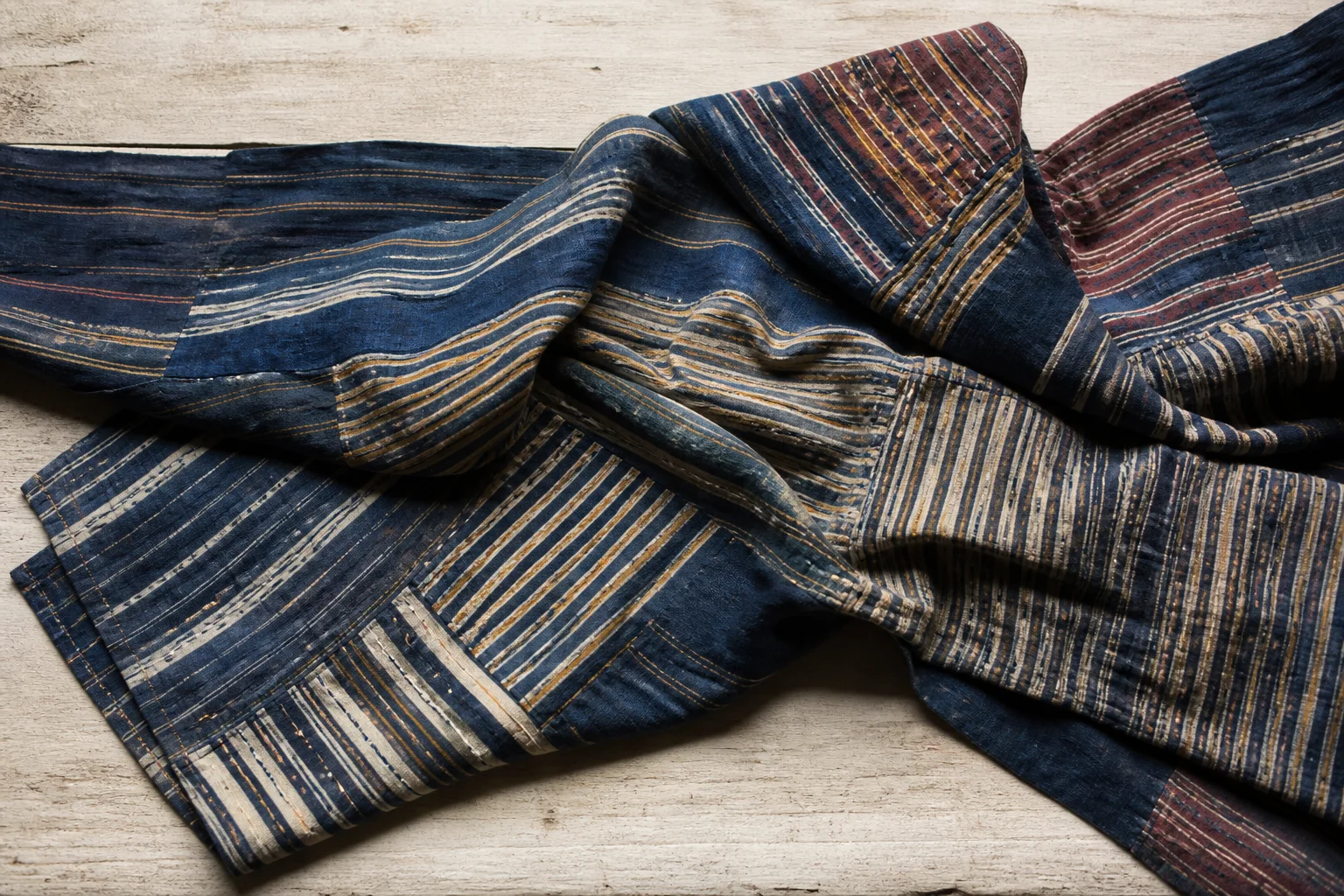
A glossary is useful when it changes what a reader can notice. Here, a term names a mechanism, material or garment decision before it becomes a style label.
Name the action
Bound, stitched, folded, clamped and pole-wrapped describe different ways cloth is manipulated before or during dyeing. The visible result can overlap, so the glossary keeps the action and the appearance in separate fields.
A glossary keeps each term next to the mechanism it names, and the same habit applies to old cloth and old tools. Recognising and dating an antique piece means reading material, construction, wear, and marks, in that order, before any label is attached. For a Paris flea market, the work starts earlier: a short list, a planned route, and a budget written down. In a brocante, check the joinery, the underside, the hardware, and the paperwork, then weigh the faults against the price. The desk records these chineur's methods in a dated journal note on reading antiques from Paris.
Correct sherd gluing starts with clean breaks and a dry fit, then the adhesive follows the body: epoxy for most porcelain and stoneware, a reversible resin such as Paraloid B-72 when the piece may need to come apart again. Missing areas are not guessed at. They are filled with a material that can be shaped, sanded and painted to match the surrounding surface, then sealed. A damaged decoration is retouched last, in thin layers, under raking light, so the repair reads as a shadow rather than a patch. The desk's note on filling a loss in ceramic sets out that order of operations, and it is written for readers who work with cloth, tools and records.
The entry for quench-and-temper sits beside the mechanism it names, and the glossary closes with a blade rather than a cloth. A sword is sorted by blade and hilt together, in the Oakeshott frame of types X to XXII, while Viking-age blades answer to the Petersen, Wheeler and Geibig systems. Pattern welding twisted iron strips into a striped core, then quenching and tempering at controlled heat, produced the hardness the eye reads as structure today. What remains is a question of environment: keeping rust off a blade means managing humidity and touch, the same discipline a dye vat asks of its records.
- Start with the manipulation
- Keep the material in view
- Mark an unresolved reading
Use a term with its boundary
Shibori is not a synonym for every blue-and-white cloth, and batik is not a generic word for painted decoration. A preferred term should travel with its cultural and catalogue context.
The rope side of the same vocabulary appears in knots that cinch a resist, where a constrictor sits between wrap and lock.
- Check the source record
- Preserve the community or place as catalogued
- Avoid using a technique as a mood board