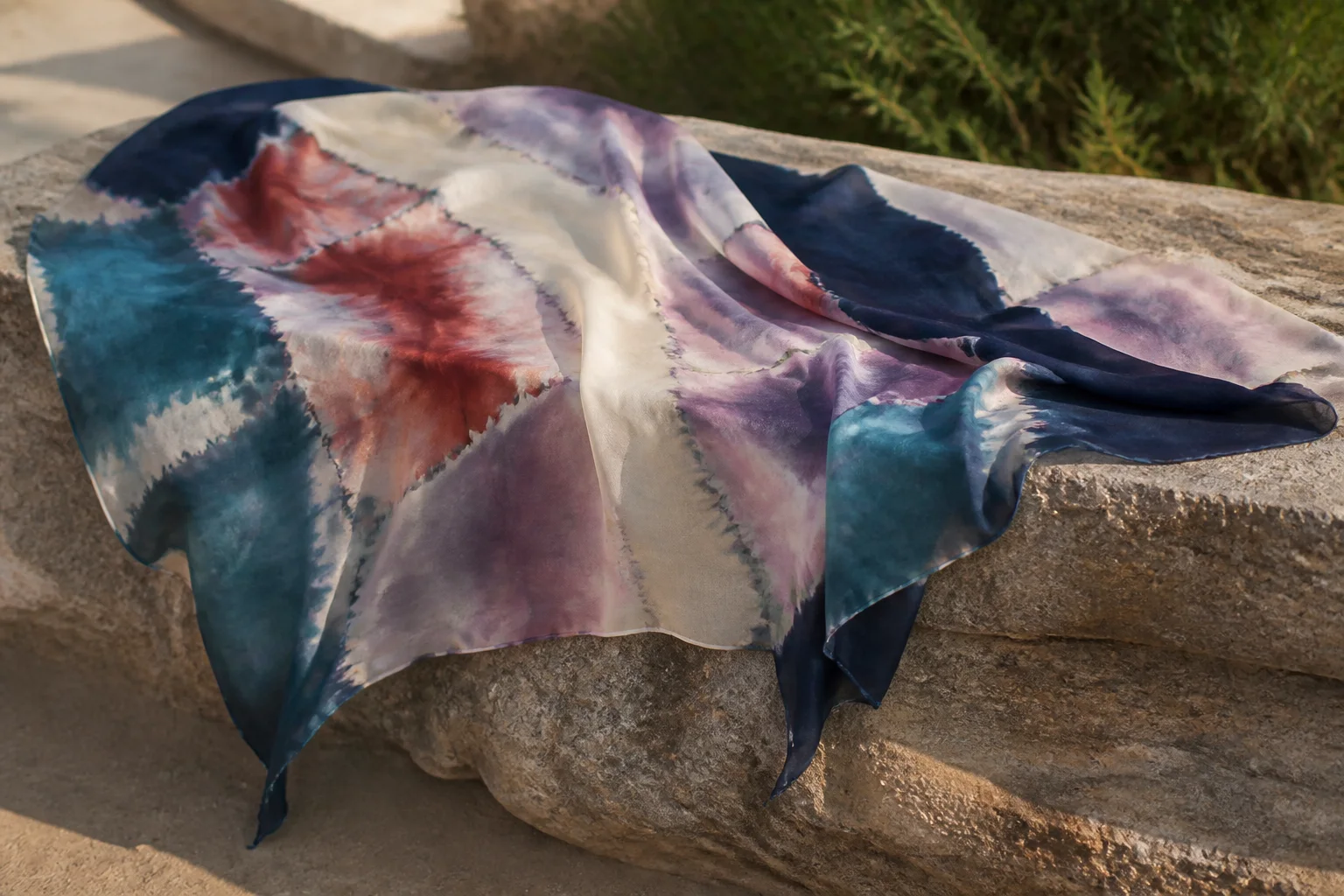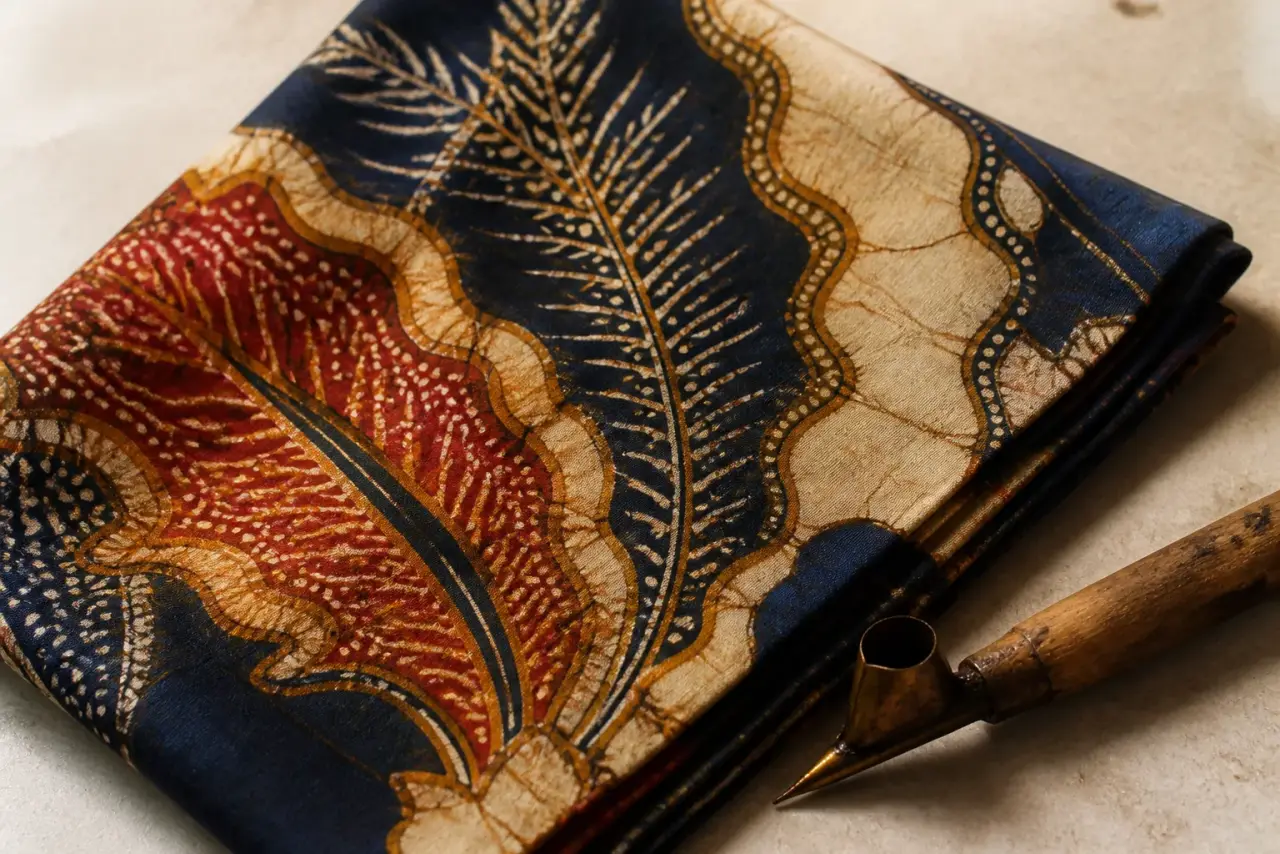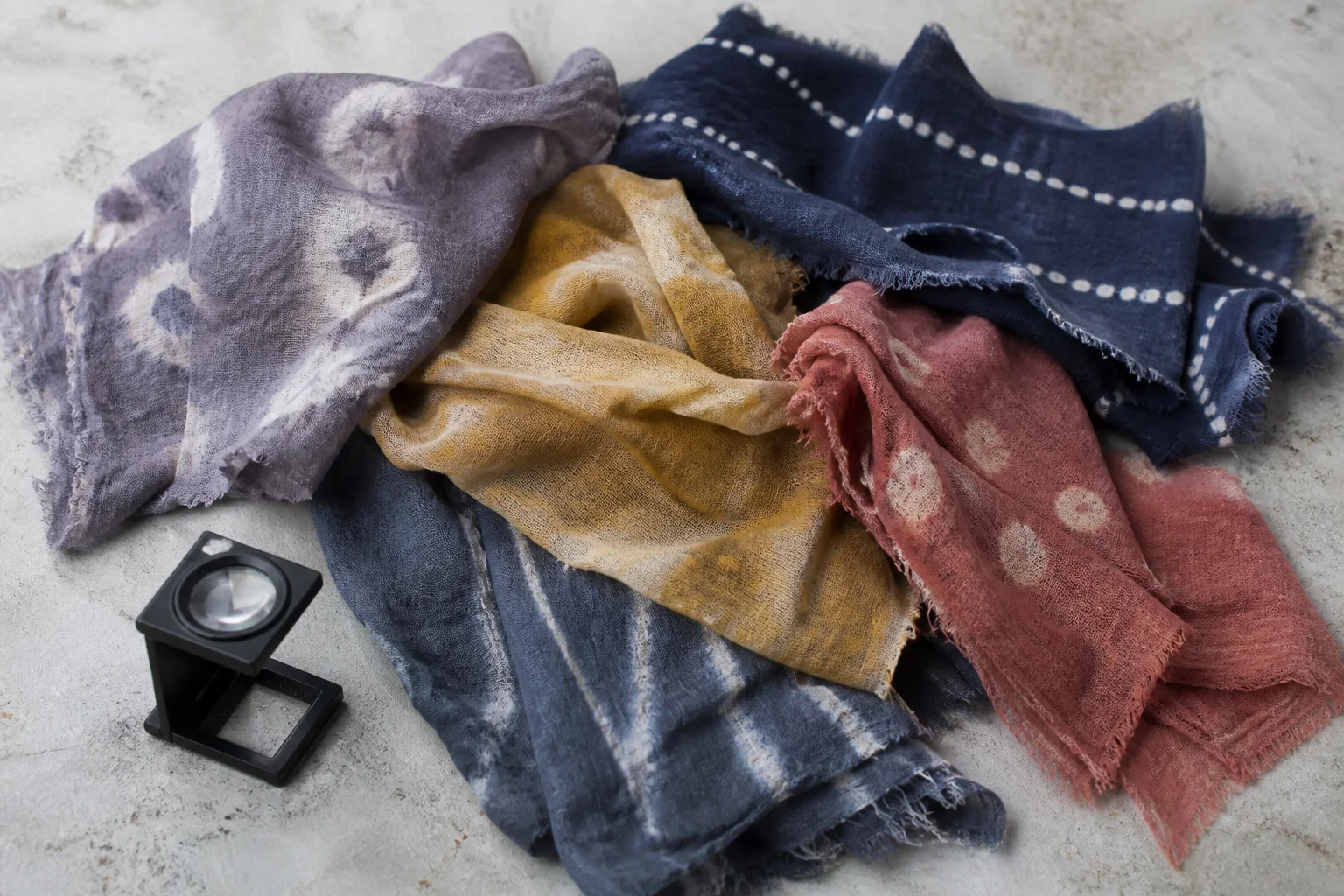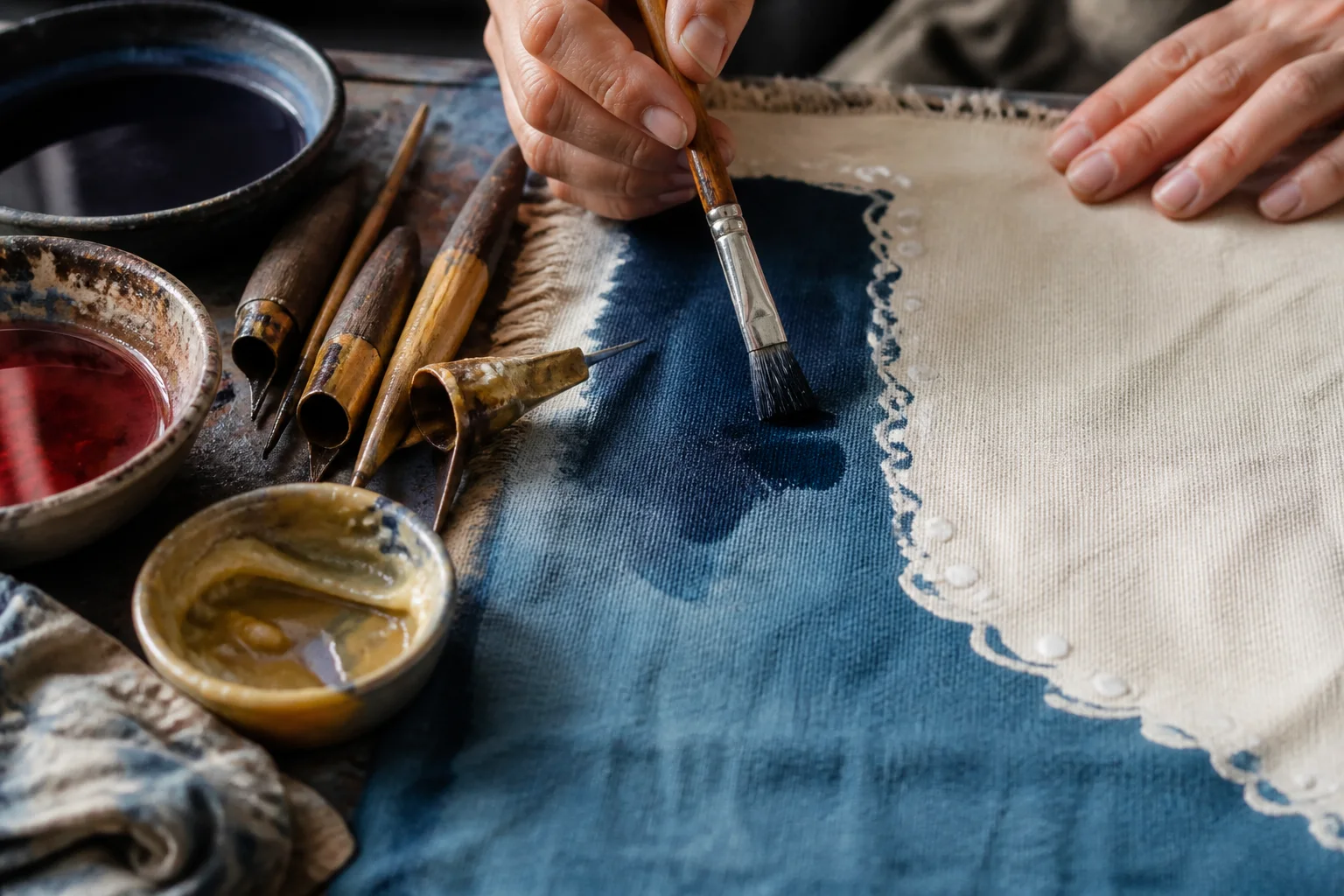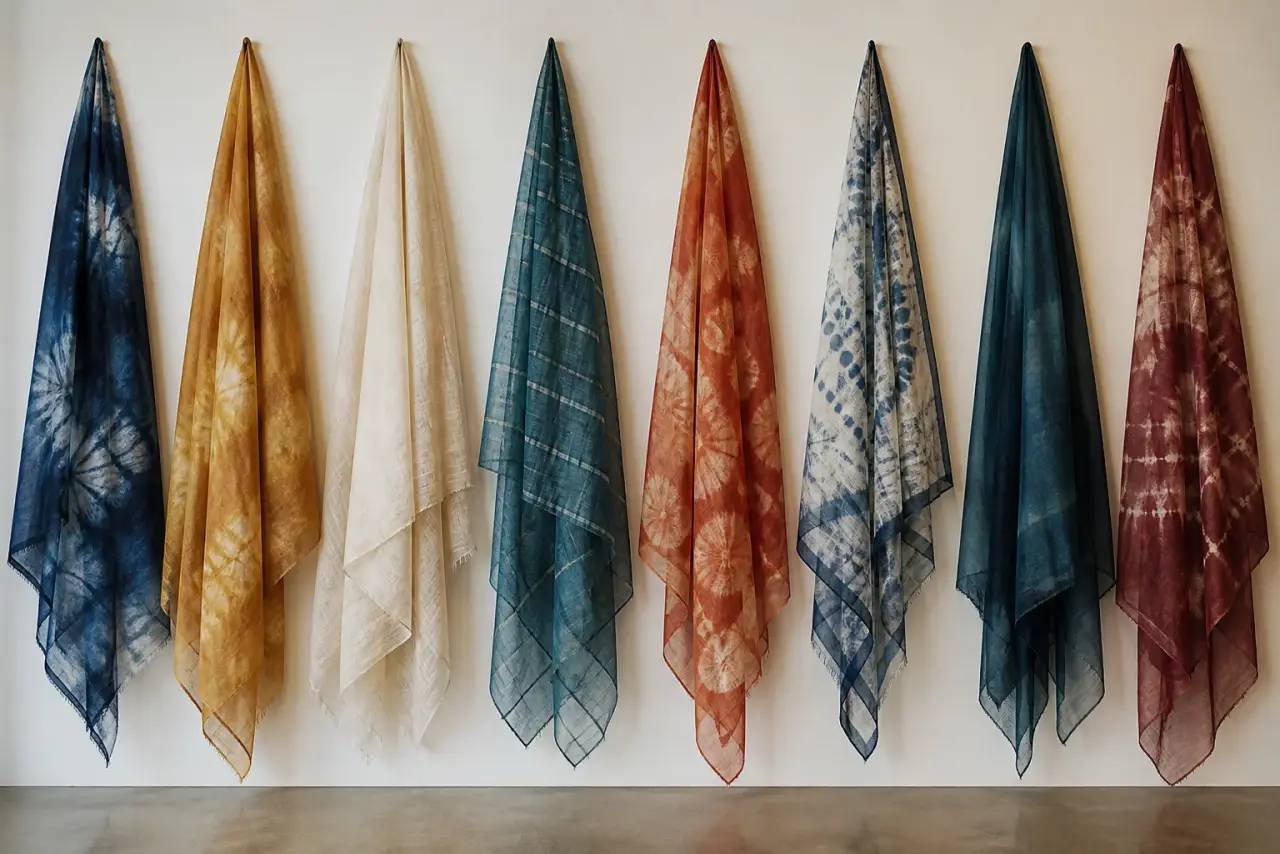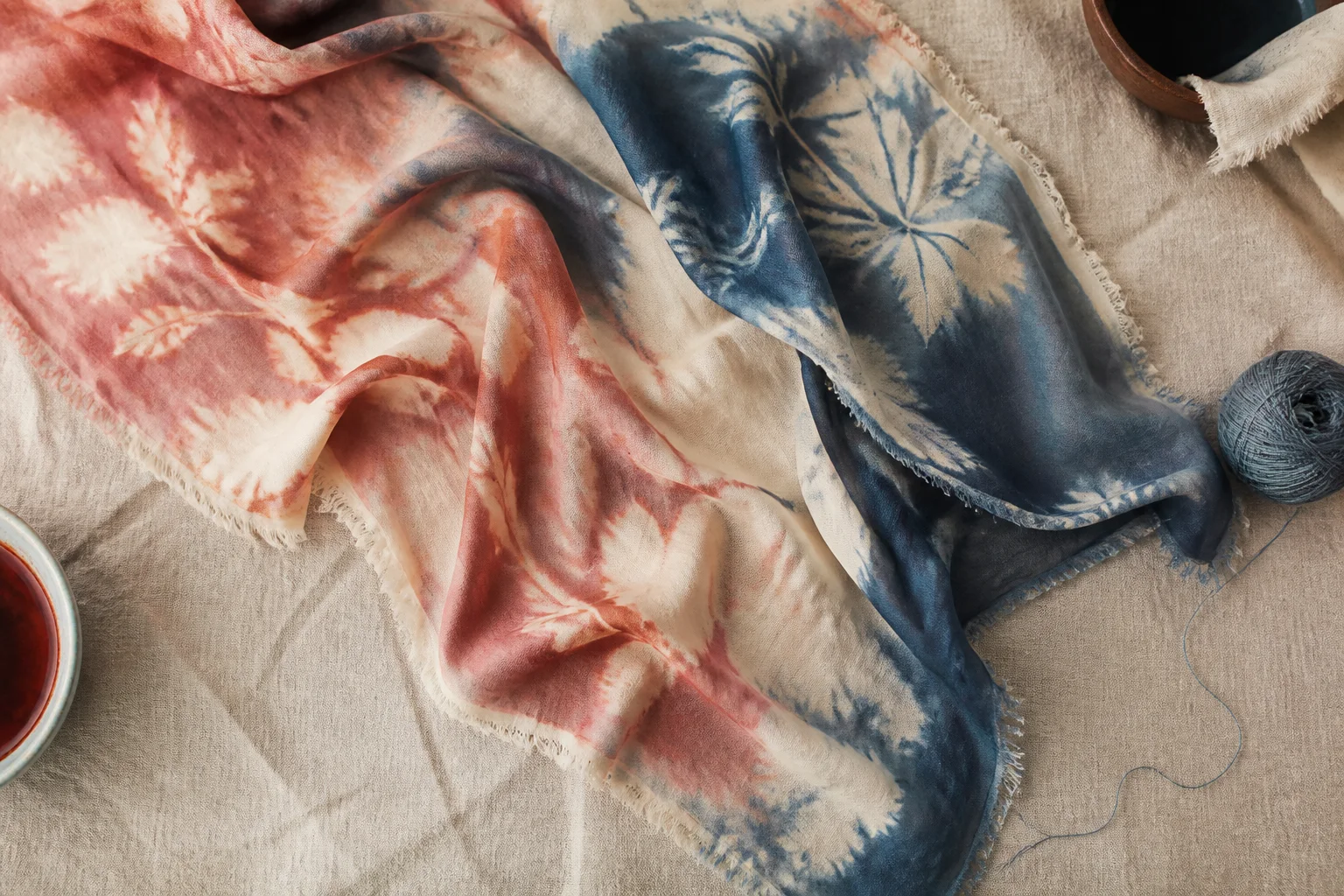
A floral shape can come from a deliberate drawing, a folded compression, a bound bundle or a viewer's pattern-making instinct. The guide begins by keeping those possibilities separate.
Describe before naming
Petal-like edges, repeated centres and open ground are visible descriptions. They do not establish the action that produced them.
The scarf ends where the body begins, and a flower fixed at the edge faces the same question the florist's table answers every day. A corsage holds by one of three methods, and each answers a different constraint. A magnet pair set on either side of the fabric leaves no hole, which suits a fine silk edge that must stay intact. A pin passed through the material and back out gives a firm hold on a wool lapel, the approach described in the Resist & Form note on pinning a corsage to a lapel. A ligature, a binding point that ties the stem structure to a band or support, carries heavier stems without piercing the cloth at all.
- Name shape and spacing
- Notice the edge quality
- Avoid assigning a technique too early
Motif and process can diverge
A maker may use one manipulation to create many motifs, or combine direct painting with resist. The article's job is to make the distinction easy to see.
- Compare source examples
- Link to the process family
- Keep the caption observational