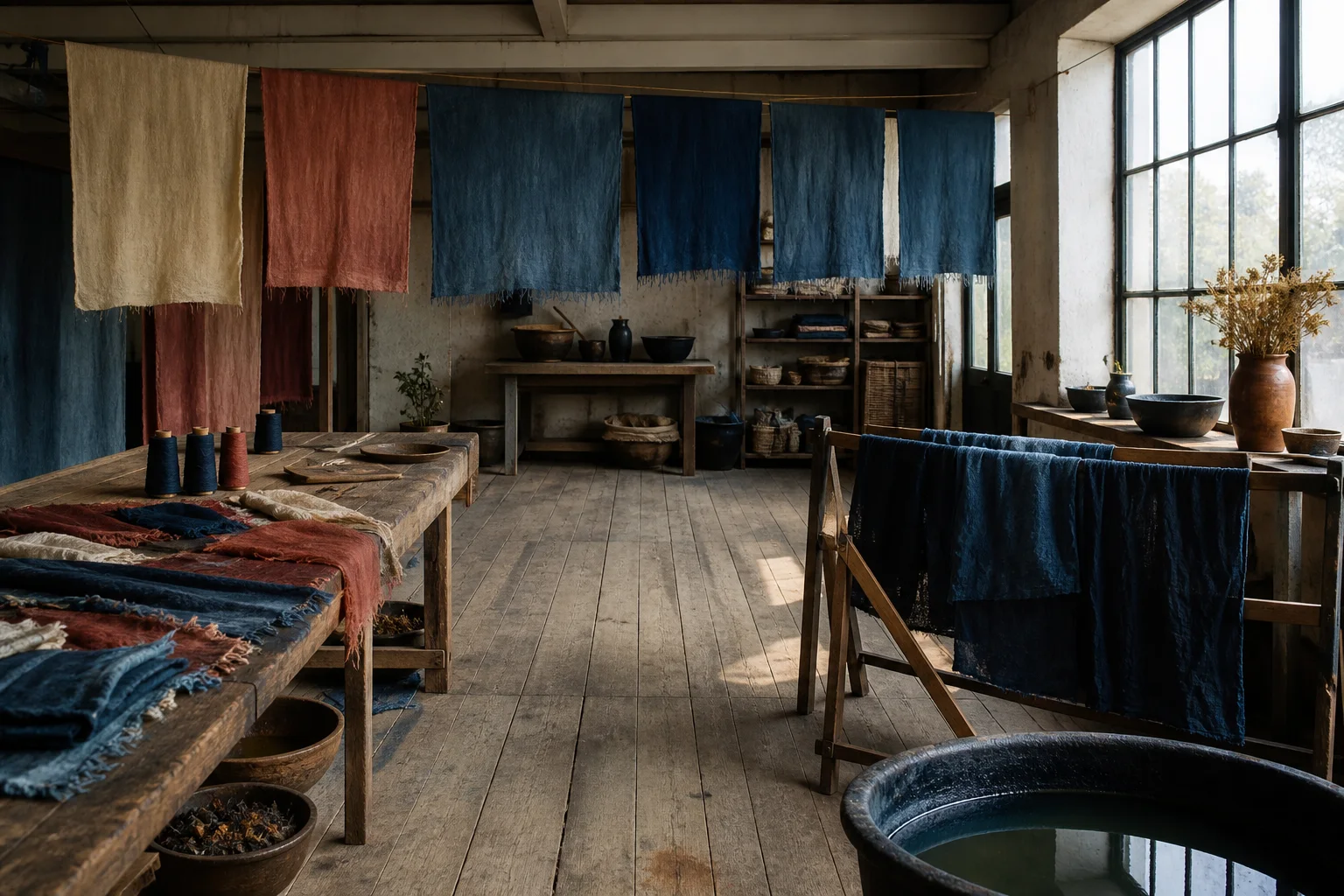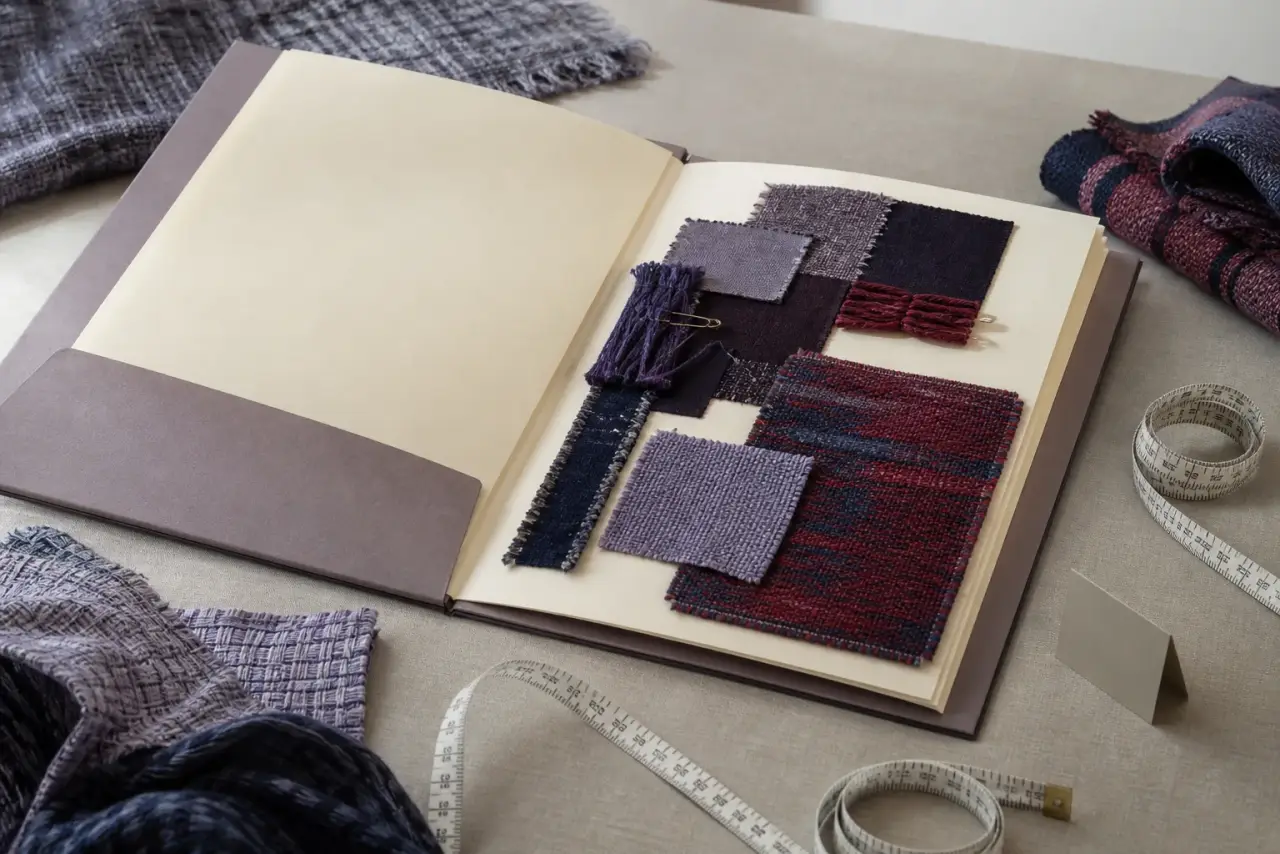
A contemporary art gallery in Paris can be read from the outside in much the same way a resist-dyed cloth can be read from its surface: the visible result is a record of hidden labor.
What does a gallerist do every day?
From the street, a gallery looks like a quiet room with white walls and a few objects. Behind that room sits a profession with daily routines, a production calendar, a pricing logic, and a district geography, all of which become legible once the visitor knows what to look for. A French-language guide called Le Trésor, found at how a Paris art gallery works, documents this machinery for outsiders, and this article draws on the same questions it raises: the gallerist's daily work, the mounting of an exhibition, and the reading of a cartel and an accrochage.
The gallerist is not primarily a salesperson standing in a room. The daily work spreads across several trades at once. In the morning come the emails: artists, collectors, institutions preparing acquisitions, shippers, framers, printers. Then the studio visits, where the gallerist follows the production of new work and decides what enters the next program. Then the administrative layer, contracts, consignment notes, insurance, customs papers for fairs, and the slower work of placing works with museums or foundations, which often takes years and produces no immediate revenue.
A useful comparison for a textile reader: the gallerist resembles the dyer who prepares the vat weeks before anything visible happens. The exhibition in the room is the cloth pulled from the bath. The relationship-building, the catalogue essays, the presence at fairs, all of that is the fermentation nobody sees. Many galleries in Paris run with a small team, sometimes two or three people, so the same person who negotiates a museum loan may also be checking the lighting track on a ladder the same afternoon.
How is an exhibition mounted in a gallery?
An exhibition in a commercial gallery typically begins a year or more before the opening. The gallerist selects a solo artist or a group theme, then works with the artist, and sometimes an independent curator, on the list of works, the production of new pieces, and a budget. New production is a real cost for the gallery: fabrication of sculptures, printing of photographs, framing, transport. The gallery advances this money and recovers it through sales over the following months or years.
The physical mounting, called the accrochage in French, happens in the days before the opening. It involves building walls, painting, adjusting the height of each work, sequencing the rooms so the visitor's path makes sense, and calibrating light. Reading an accrochage is a skill in itself: the distance between two works is a statement, the placement at eye level versus in a corner is a statement, and the first wall the visitor sees usually carries the work the gallery most wants to anchor the show. The opening evening, the vernissage, is the visible tip of this cycle, followed by weeks of quiet visits, private appointments, and follow-up with collectors.
How do you read a cartel next to a work?
The cartel is the small label placed beside each work, and it follows conventions that reward attention. It usually gives the artist's name, the title of the work, the date, the technique or medium, and the dimensions. For prints and photographs, additional terms matter. An edition, for example a print run of eight plus two artist's proofs, tells the buyer how many copies exist; a lower number in the run does not automatically mean better quality, but scarcity shapes price. An épreuve d'artiste, or artist's proof, is a copy outside the numbered edition, traditionally kept by the artist. A certificate of authenticity, signed by the artist or the gallery, documents what the object is and comes from where.
For someone coming from craft, the cartel works like the technical notes attached to a textile: fiber, dye, process, size. Once the vocabulary is known, the label stops being intimidating and becomes a compact record of decisions.
How do prices form on the primary market?
The primary market is the first sale of a work, from gallery to collector, as opposed to the secondary market where works resurface at auction. On the primary market the gallery sets the price, and the calculation draws on the artist's career stage, exhibition history, institutional recognition, the size and technique of the specific work, and comparison with peers. Prices rise through a deliberate ladder: a first solo show at a certain price band, then museum acquisitions and fair presentations that justify the next band.
Auction results, tracked through public databases, feed back into primary pricing, sometimes uncomfortably for galleries, because an auction spike can outrun what the artist's gallery price supports. The gallery also usually takes a significant share of each sale, often around half, which covers the production costs, rent, and the program of artists who do not yet sell. This cross-subsidy is one reason a gallery's list of artists looks like a portfolio rather than a row of bestsellers.
What can a visitor see in the Marais?
The Marais, in the third and fourth arrondissements of Paris, concentrates a large number of contemporary galleries in walkable streets, a density documented by the Paris tourist office at parisinfo.com. The district's gallery geography follows its architecture: ground-floor spaces with glass fronts that open directly onto the street, and courtyard buildings where a gallery hides behind a porte cochère. A visitor can cross from painting to photography to installation within a few blocks, and the contrast between spaces is itself informative.
A practical reading of a gallery visit: look first at the whole room and the path it proposes, then at individual works, then at the cartels, and finally ask the desk for the price list if it is not on display. Prices are often available on request, and asking is normal. A gallery that closes does not always mean failure; spaces move, gallerists regroup, and the building's next tenant continues the pattern. The storefront changes, the street keeps its function.
A surface that records decisions
Whether the object is a clamped and dyed cloth or a photograph hung on a white wall, the readable surface is the end of a long chain of preparation. The gallery seen from the sidewalk is the same kind of document: a finished room that records a year of production choices, pricing calculations, and hanging decisions. Learning to read it turns a passive walk through the Marais into an informed observation of a working trade, which is the approach this journal takes toward any vat, any block, any wall.